

 English
 中文简体
中文简体 Español
 عربى
عربى русский

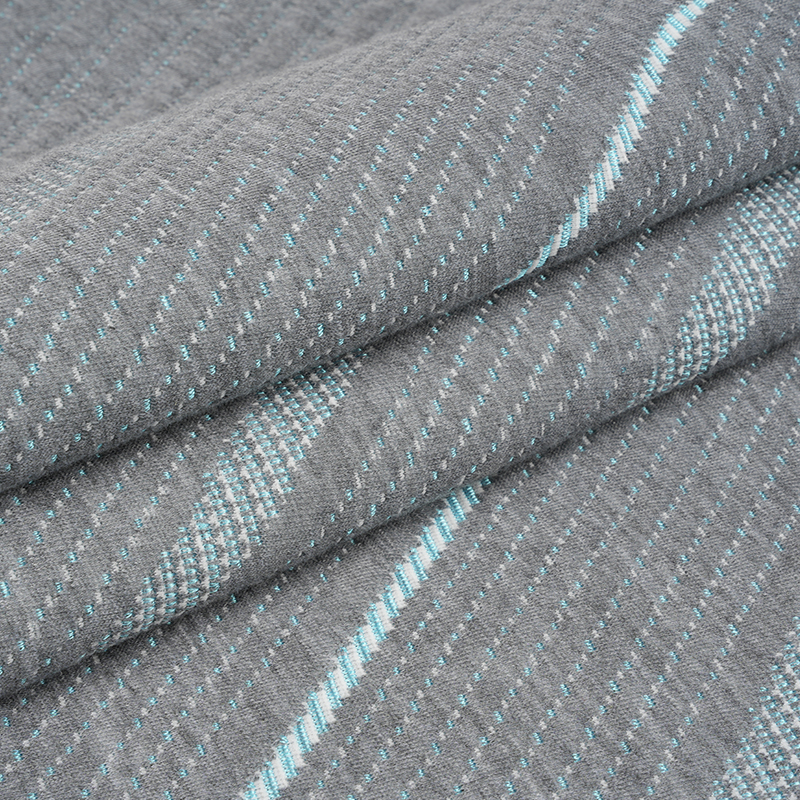
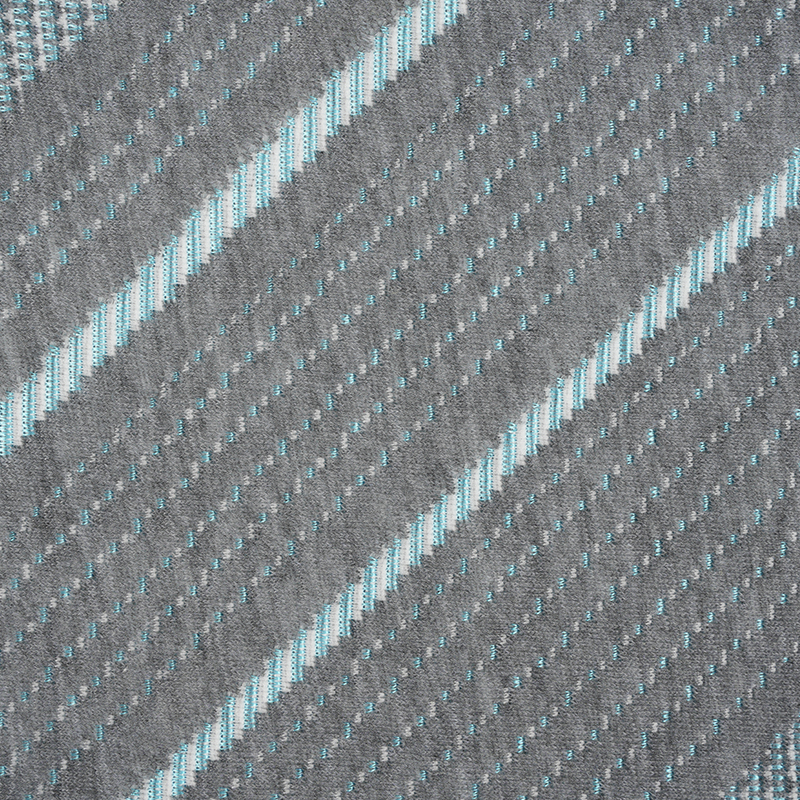
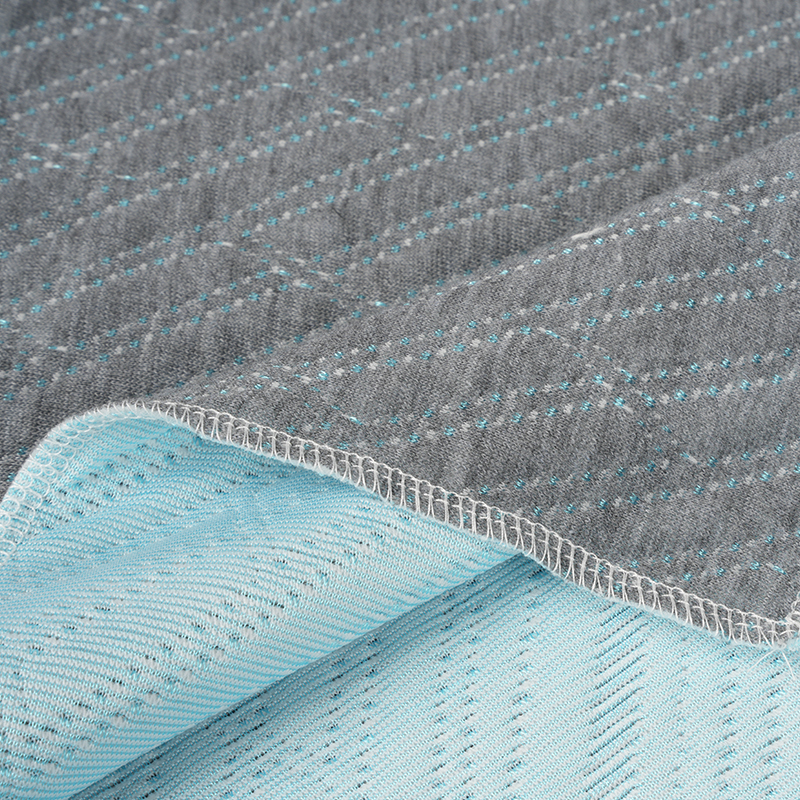

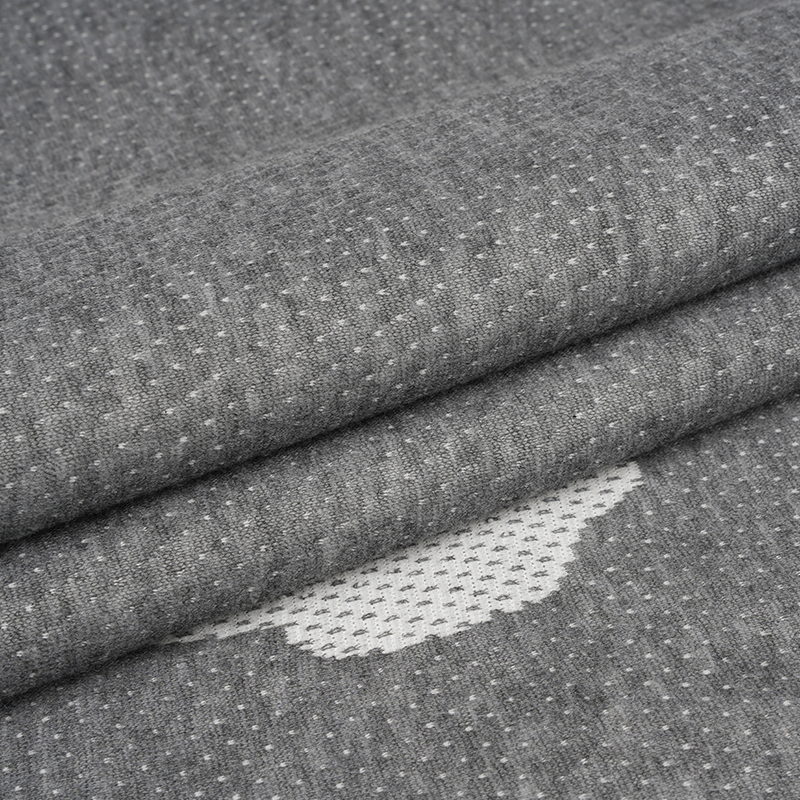
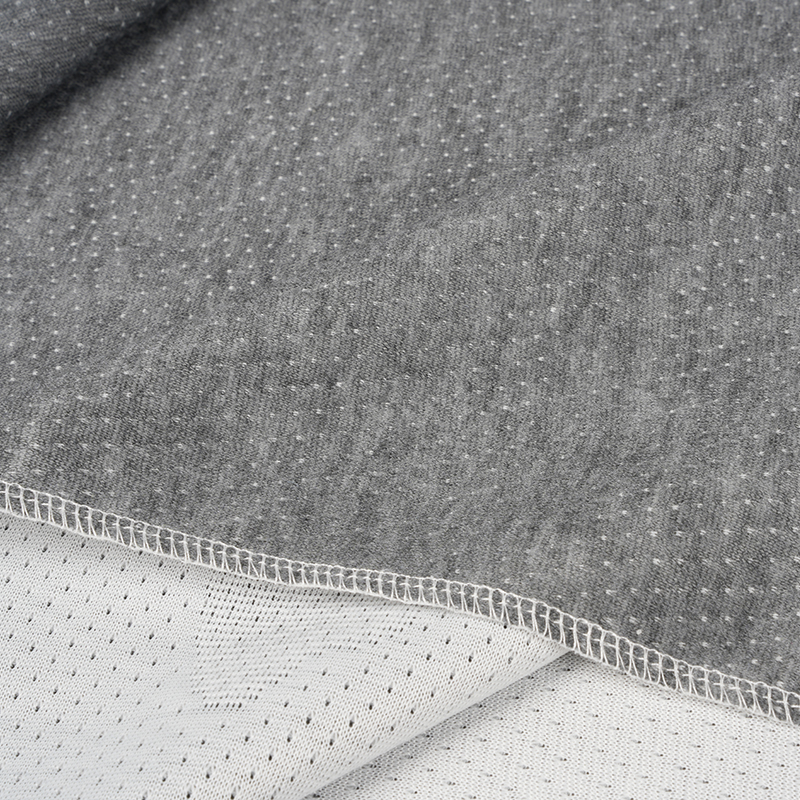
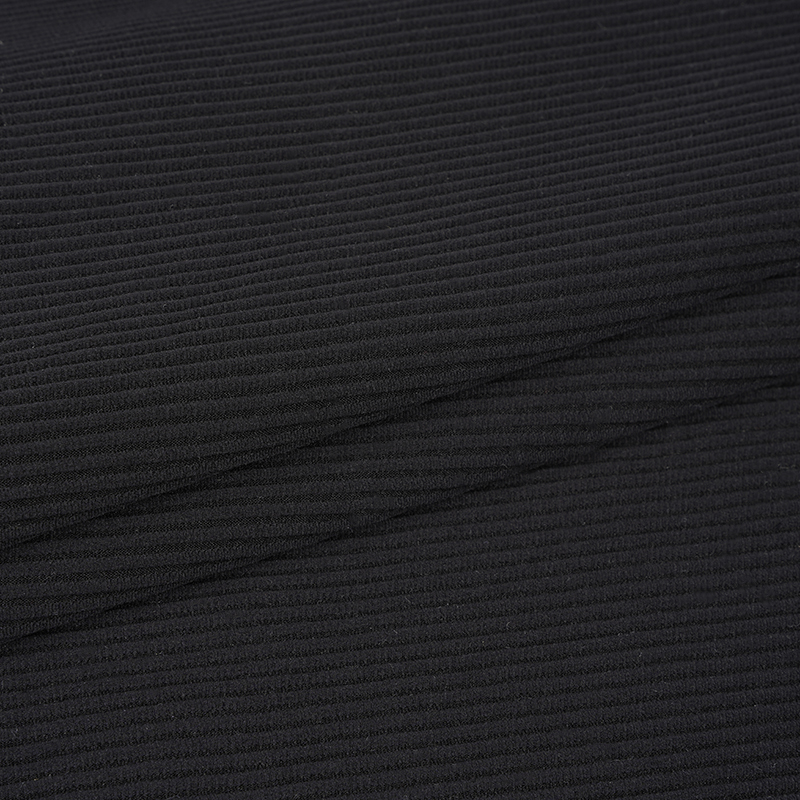
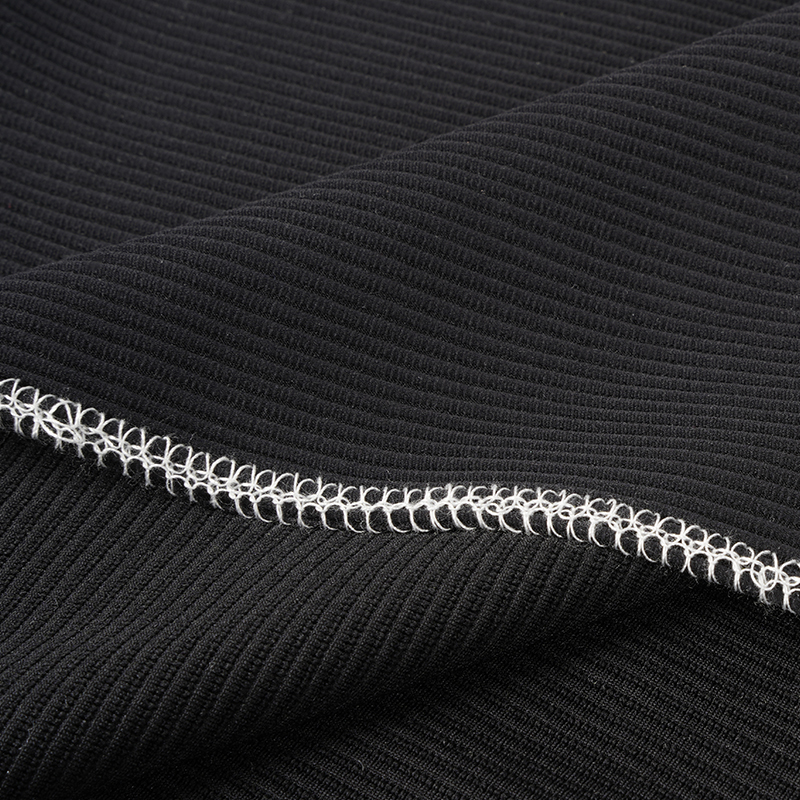
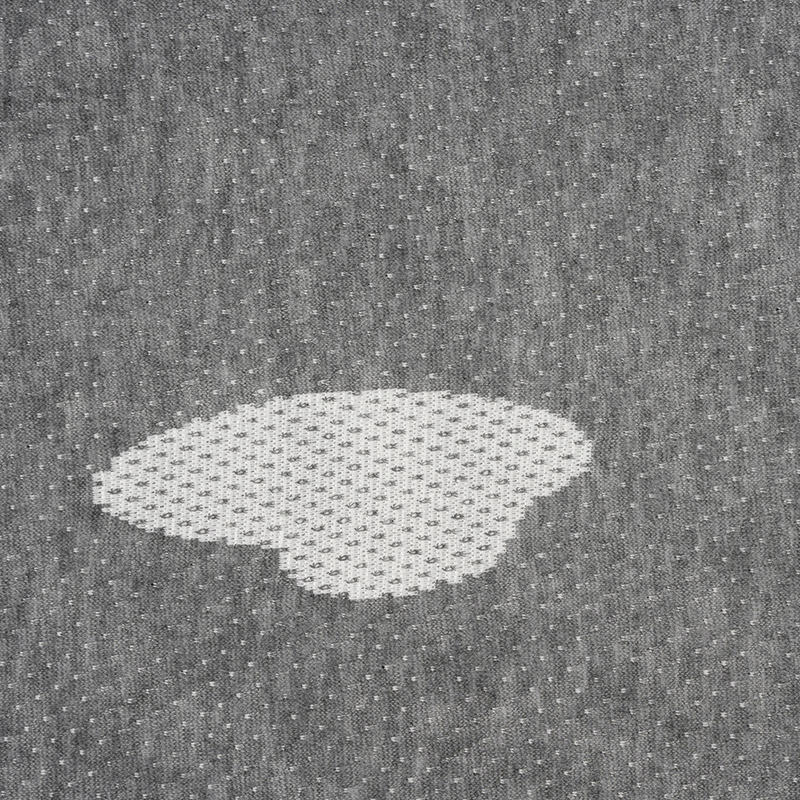
The graphene material in the knitted air-layer fabric boasts three core properties: far-infrared heating, antibacterial and anti-mite properties, and anti-static properties. Graphene sheets absorb heat emitted by the human body and convert it into far-infrared rays, promoting local blood circulation and enhancing warmth and comfort. Its unique two-dimensional structure disrupts the living environment of bacteria and mites, exhibiting an antibacterial rate of over 99% against Escherichia coli and Staphylococcus aureus. Furthermore, graphene's conductivity allows for the rapid release of static electricity, preventing the fabric from attracting dust and hair, keeping home textiles clean and fresh.
Graphene pillowcase fabric is an innovative functional textile that integrates graphene material with base fibers. Its core technology lies in utilizing the unique two-dimensional carbon atom structure of graphene, which is bonded to the substrate fibers through specialized processes, endowing the fabric with multiple physical properties. Upon contact with the body, this fabric facilitates even heat dissipation, helping to regulate the microclimate during sleep. Compared to conventional pillowcase fabrics, it focuses not only on tactile comfort and aesthetics but also on enhancing the functional experience through material science, making it suitable for bedding products designed to improve sleep quality.
Core Advantages
● Thermal Conductivity Management: The lattice structure of graphene aids in accelerating heat transfer, reducing localized overheating, and maintaining a cool, dry pillow surface.
● Bacterial Inhibition: Graphene material inhibits the growth of various bacteria.
● Static Dissipation: The conductive properties of graphene help dissipate static charges, reducing the attraction of dust and hair to the fibers.
● Material Stability: Chemically stable, wash-resistant, with durable functionality.
Product Features
1. Temperature Regulation: Non-heating material; assists in balancing temperature in the contact area between the head and pillow through efficient heat conduction.
2. Physical Antibacterial Property: Inhibits bacteria through material surface characteristics, without relying on chemical coatings.
3. Breathability: The fiber integration method typically avoids additional film layers, preserving the breathability of the base fabric.
4. Durability: Graphene is firmly bonded to the fibers, and its functionality withstands multiple home launderings.
5. Safety: Raw materials are free from heavy metals, complying with ecological safety standards for textiles.
Application Scenarios
● Household Bedding: Suitable for pillowcases paired with various types of pillow inserts.
● Health & Wellness Bedding: Applicable for individuals with specific concerns about their sleep environment.
● Hotel Upgrade Supplies: Used to enhance the functional selling points of guest room bedding.
● Gift & Customization Market: Serves as a mid-to-high-end functional home textile gift item.
Specifications & Notes
● Common Composition: Typically a blend of graphene-composite fibers (e.g., polyester, viscose) with other fibers (e.g., cotton, Modal). A common blend ratio is 92% Polyester (containing graphene masterbatch) + 8% Spandex.
● Grammage Range: Commonly 120-200 GSM, suitable for year-round use.
● Washing Instructions: Recommend washing at temperatures below 40°C with mild detergent, using a gentle machine cycle. Avoid prolonged soaking and bleaching. Iron at medium temperature.
● Storage Conditions: Store in a cool, dry place away from prolonged direct sunlight.
● Important Note: This product is a physical functional fabric intended to improve sleep contact experience. It is not designed to treat diseases or serve as a substitute for medical products.
We Create Safe, Healthy and Comfortable Living Spaces Through Innovative Technology.
Hangzhou Xinsili Decorative Fabric Weaving Co.,Ltd. specializes in the innovative research, development, and precision manufacturing of decorative textiles.
We are China Graphene Pillowcase Fabric Manufacturers and Custom Graphene Pillowcase Fabric Factory, Exporter.
Guided by the vision of "Weaving Beautiful Spaces," we are committed to delivering high-quality, environmentally friendly decorative solutions to global clients through our stable and practical fabric products. Upholding the corporate values of "Craftsmanship-Driven Manufacturing, Design Innovation, and Win-Win Collaboration," we empower design through technological advancement and build trust with steady and reliable quality, striving to become a trusted partner in the decorative textiles industry.
Years of Industry Experience
Factory Area
Number of Employees
Annual Output
Export Volume
Provide you with the latest enterprise and industry news
Read MoreThe functional performance of Graphene Pillowcase Fabric hinges critically on the quality of graphene integration and the stability of its dispersion within textile matrices. Graphene exists in multiple forms: pristine single-layer graphene, few-layer graphene (FLG), graphene oxide (GO), and reduced graphene oxide (rGO). Each variant presents distinct trade-offs between electrical/thermal conductivity, mechanical flexibility, and processing compatibility. Single-layer graphene offers superior electron mobility (>200,000 cm²/V·s) but proves nearly impossible to disperse uniformly in polymer solutions without aggregation.
Graphene oxide, produced through modified Hummers methods involving strong oxidation, disperses readily in water and polar solvents due to abundant oxygen-containing functional groups (hydroxyl, epoxy, carboxyl). However, this oxidation disrupts the sp² carbon network, reducing electrical conductivity by orders of magnitude. Thermal or chemical reduction restores partial conductivity but never achieves pristine graphene values, typically reaching 10²-10⁴ S/m compared to 10⁶ S/m for pristine material. For textile applications prioritizing thermal management over electrical properties, this conductivity reduction often proves acceptable.
Hangzhou Xinsili Decorative Fabric Weaving Co.,Ltd. evaluates graphene sources based on lateral dimension distributions and defect densities. Micromechanically exfoliated graphene from graphite provides highest quality but lowest scalability; chemical vapor deposition (CVD) yields large-area continuous films suitable for coating applications but incompatible with fiber integration; liquid-phase exfoliation and electrochemical exfoliation offer intermediate solutions with batch-to-batch consistency challenges. The absence of standardized characterization protocols—disagreement over what constitutes "graphene" versus "graphite nanoplatelets"—complicates supplier qualification and performance prediction.
Graphene's exceptional in-plane thermal conductivity (~5000 W/m·K for single layers) theoretically enables rapid heat dissipation from skin contact surfaces. However, textile integration dramatically reduces effective conductivity due to random orientation, polymer matrix thermal resistance, and percolation threshold limitations. Through-plane conductivity in graphene-polymer composites typically reaches 1-10 W/m·K—substantially below pure graphene but significantly exceeding cotton (~0.06 W/m·K) or polyester (~0.15 W/m·K). This enhancement manifests as improved heat spreading rather than heat sinking, redistributing localized warmth across broader fabric areas.
Far-infrared (FIR) emission claims associated with graphene textiles require careful technical examination. All materials above absolute zero emit thermal radiation; graphene-modified fabrics may alter emission spectra through modified surface emissivity, but "FIR therapy" effects lack robust clinical validation for textile applications. The 4-14 μm wavelength range, coinciding with human body thermal radiation peak (~9 μm at 35°C), provides theoretical resonance opportunities, though energy transfer mechanisms through fabric layers remain poorly characterized in peer-reviewed literature.
Electrothermal functionality—resistive heating through graphene networks—offers more quantifiable performance. Low-voltage heating elements (<12V) woven or printed into pillowcase structures enable temperature modulation for therapeutic or comfort applications. Sheet resistance requirements (typically 10-100 Ω/sq for moderate heating) demand precise graphene loading and dispersion control. Challenges include uniformity maintenance through flexing and washing, potential hot-spot formation at conductivity discontinuities, and electrical safety considerations for sleep environment applications.
Graphene's electrical conductivity enables permanent antistatic performance without hydrophilic surfactants that compromise moisture management. Surface resistivity below 10⁹ Ω/sq—achievable at graphene loadings of 1-3 wt% in polymer matrices—prevents static charge accumulation that attracts dust and causes discomfort in low-humidity environments. Unlike carbon black or metal-based conductive fillers, graphene's two-dimensional geometry creates efficient percolation networks at lower loadings, preserving textile hand feel and mechanical properties.
Electromagnetic interference (EMI) shielding effectiveness scales with electrical conductivity and material thickness. Graphene-polymer composites achieve 20-40 dB shielding (99-99.99% field attenuation) at millimeter-scale thicknesses, though single-layer pillowcase constructions provide minimal shielding (<5 dB) due to sub-millimeter thickness. Multi-layer constructions or metallized graphene hybrids improve performance but introduce cost and flexibility penalties. Claims regarding "radiation protection" for sleep environments should be evaluated against specific frequency ranges (cellular 0.7-2.6 GHz, WiFi 2.4/5 GHz) and standardized testing (ASTM D4935, IEEE 299).
The stability of electrical properties through textile processing presents significant engineering challenges. High-temperature dyeing, finishing heat exposure, and mechanical abrasion during manufacturing can disrupt graphene networks. Encapsulation strategies—core-shell fiber structures with graphene-loaded cores protected by polymer sheaths—maintain conductivity while improving durability. Alternatively, graphene application to fabric surfaces through coating or printing localizes functionality where needed but creates wear-susceptible layers requiring protective overfinishes.
The biocompatibility of graphene materials remains under active investigation, with outcomes highly dependent on physical form factors. Nanoscale graphene platelets (<100 nm lateral dimension) demonstrate potential for cellular membrane penetration and oxidative stress induction in vitro, while larger microscale flakes show reduced bioactivity. Surface functionalization dramatically influences interactions: oxygen-rich GO exhibits greater cytotoxicity than hydrophobic pristine graphene due to reactive oxygen species generation, though reduced GO's intermediate state complicates straightforward classification.
Dermal exposure routes for Graphene Pillowcase Fabric differ from inhalation or ingestion scenarios dominating toxicological literature. Intact skin presents a substantial barrier to particle penetration; concerns center on damaged skin conditions (abrasions, dermatitis) or long-term cumulative effects. Current OECD testing guidelines lack specific protocols for graphene dermal exposure, creating regulatory uncertainty. Manufacturers relying on graphene suppliers should verify third-party testing for skin irritation (ISO 10993-10) and sensitization (ISO 10993-10, OECD 406) rather than assuming material safety based on carbon composition alone.
Environmental release during product lifecycle—manufacturing wastewater, laundering effluent, and end-of-life disposal—introduces additional complexity. Graphene persistence in aquatic environments depends on surface chemistry and aggregation state; GO may undergo reduction by natural organic matter, altering transport and toxicity characteristics. Incineration of graphene-textile composites produces CO₂ without heavy metal residues, offering disposal advantages over metal-based functional textiles. Landfill degradation rates remain uncharacterized for long-term environmental impact assessment. Our commitment to environmentally friendly decorative solutions at Hangzhou Xinsili Decorative Fabric Weaving Co.,Ltd. necessitates rigorous evaluation of these emerging materials across their complete lifecycle, ensuring that technological innovation aligns with ecological responsibility.
Yi qiao Town, Xiaoshan District, Hangzhou City, Zhejiang Province, China
