

 English
 中文简体
中文简体 Español
 عربى
عربى русский

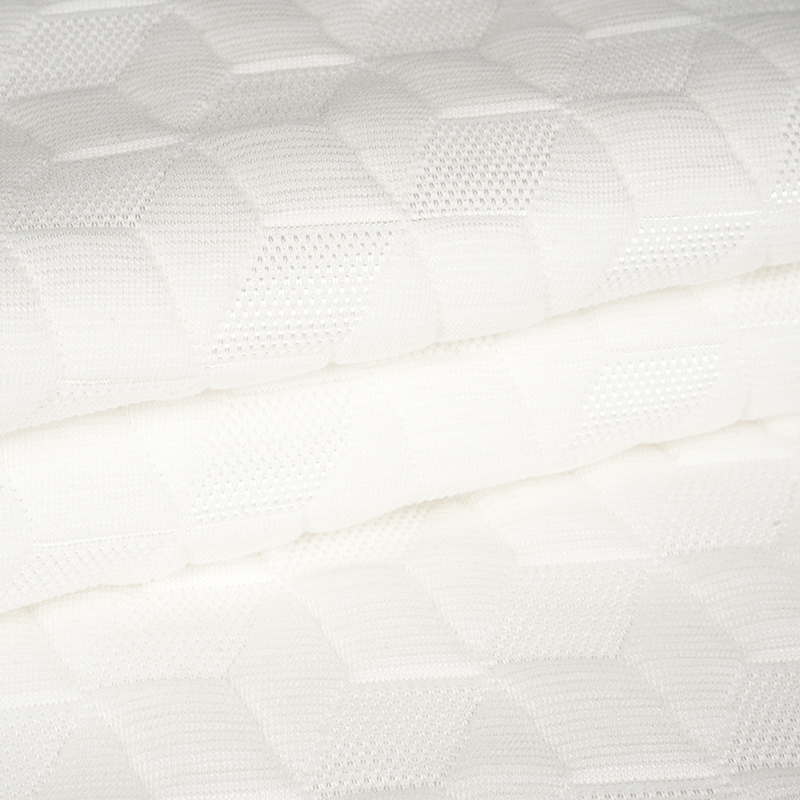
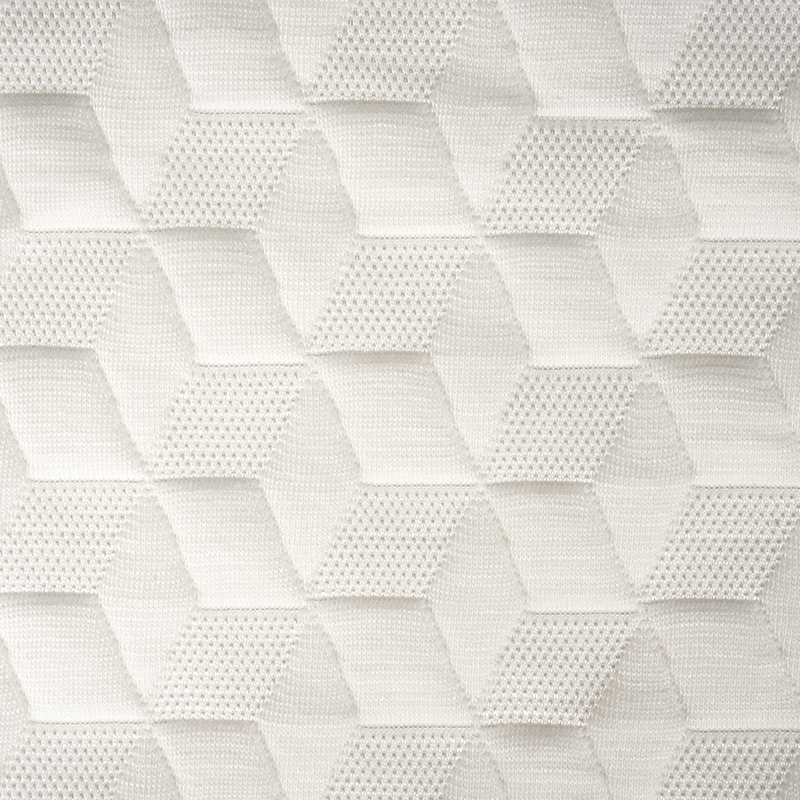
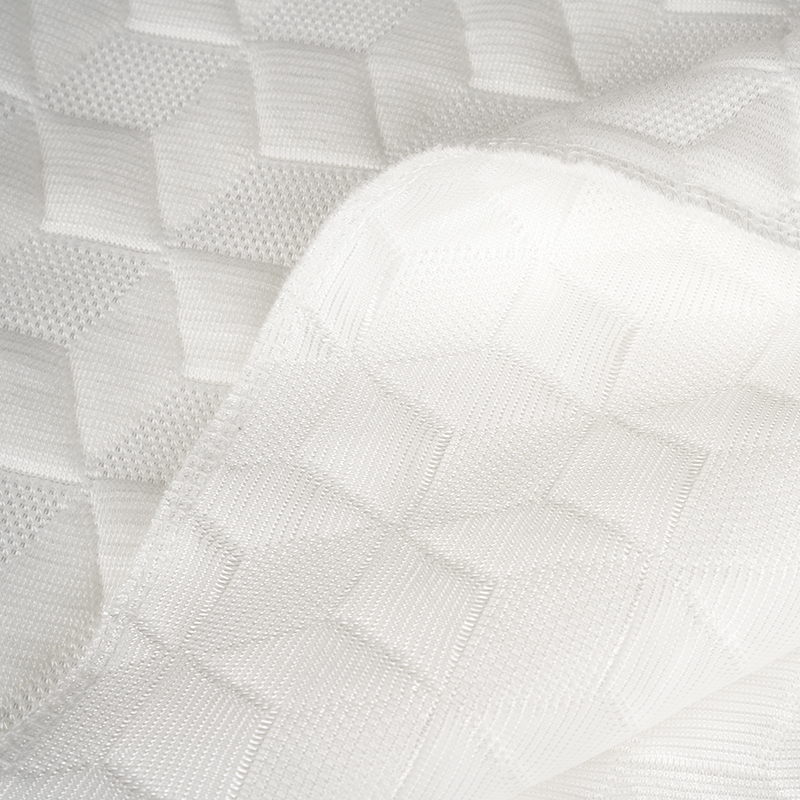

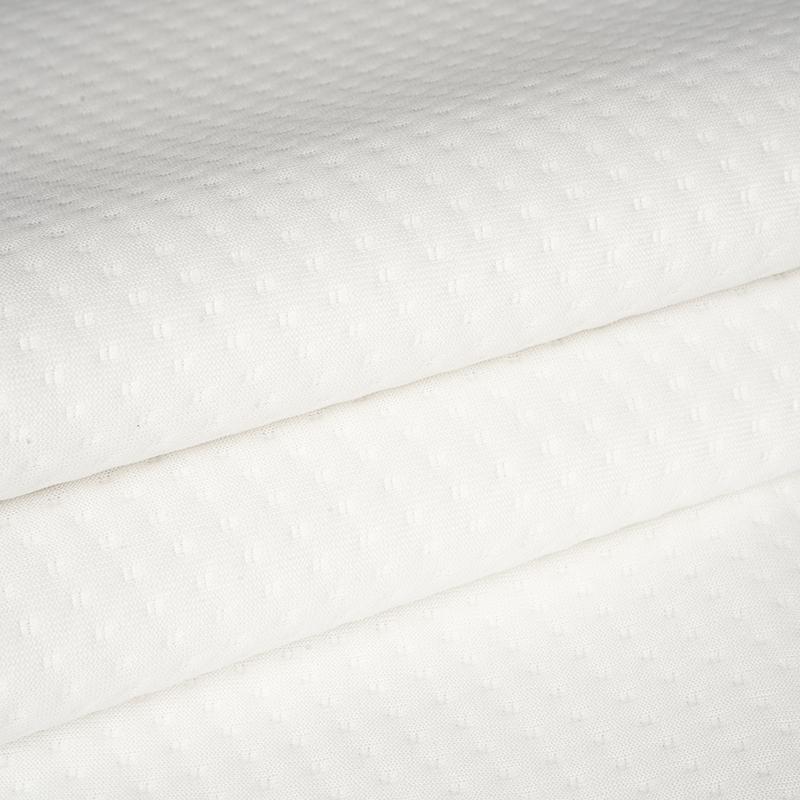
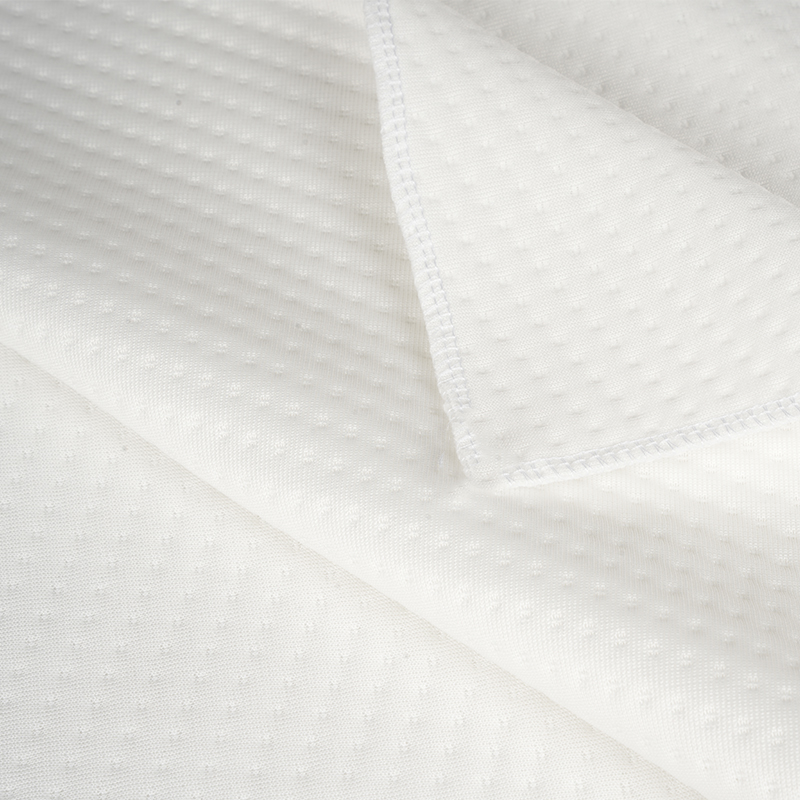
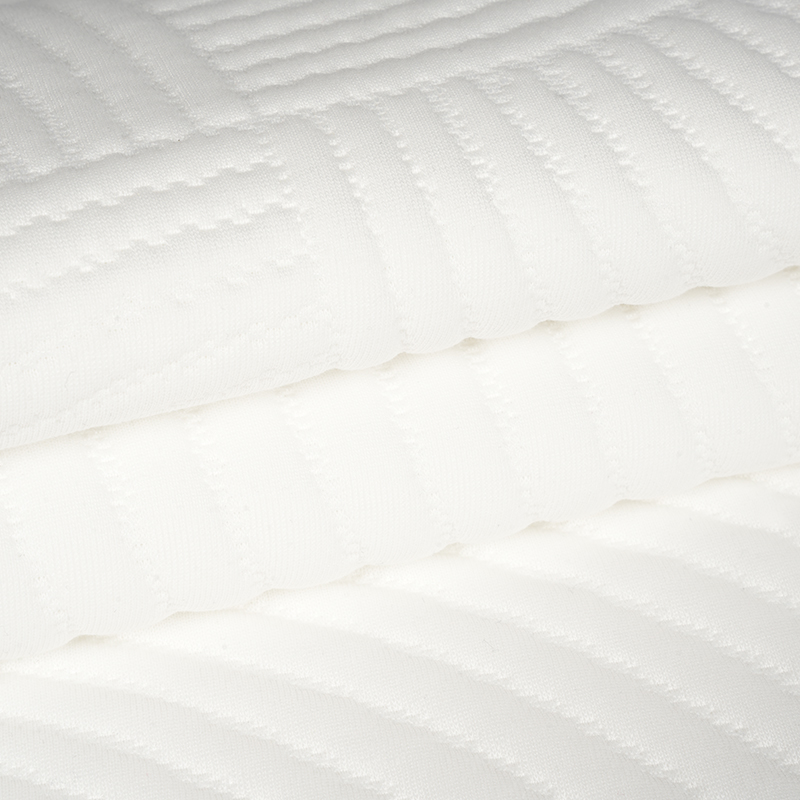
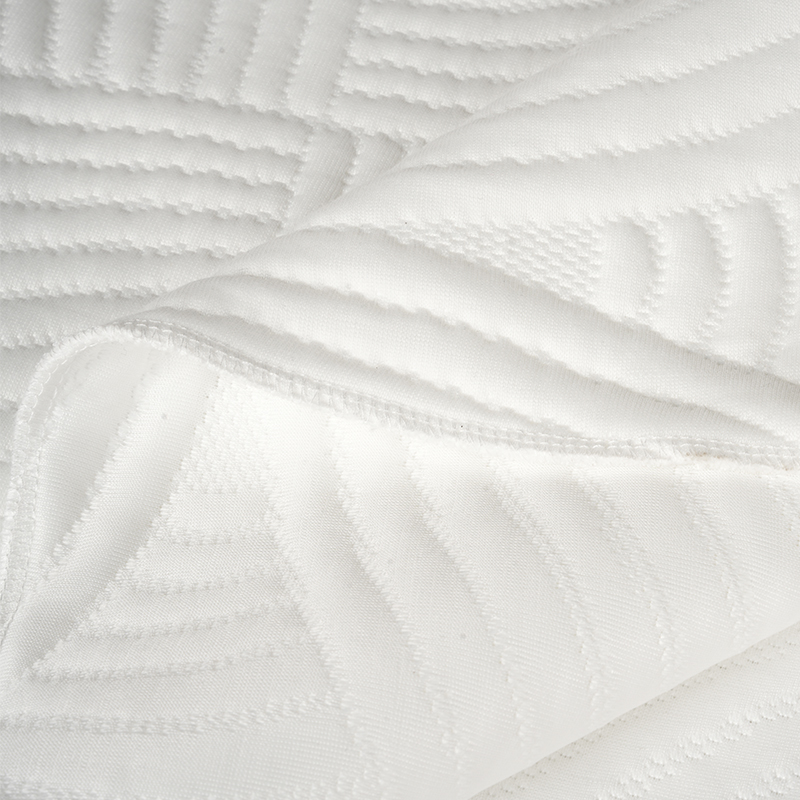
The polyester material in knitted air-layer fabrics, chemically known as polyester fiber, is a synthetic fiber made from purified terephthalic acid or dimethyl terephthalate and ethylene glycol through polycondensation and spinning. In the weaving of air-layer fabrics, polyester is often blended with spandex in a ratio of approximately 9:1, which ensures both the structural stability of the fabric and provides the air layer with appropriate elasticity. This composition does not contain allergenic impurities found in natural fibers, meets the safety standards for home textile products, and is especially suitable for mass-produced mattresses, cushions, and other home furnishings.
Polyester mattress fabric is a synthetic textile made from 100% polyester fibers or blends of polyester with other functional fibers (e.g., spandex). It is produced from raw materials including purified terephthalic acid (PTA) and monoethylene glycol (MEG) through melt spinning and weaving processes. In mattress manufacturing, this fabric is commonly used for mattress borders, top quilted layers, or protective encasements. Its construction offers a balance of support and surface texture, meeting modern mattress requirements for durability, dimensional stability, and ease of care.
Core Advantages
● Dimensional Stability: Polyester fiber features low moisture absorption and high strength, effectively resisting shrinkage or stretching due to humidity changes, thereby maintaining a smooth mattress appearance.
● Durability & Wrinkle Resistance: The fiber has good resilience, allowing the fabric to resist permanent creasing during daily use and retain a neat appearance over time.
● Easy Maintenance: Exhibits stain-resistant properties; most common stains can be wiped clean. It dries quickly and is less prone to mold growth, simplifying upkeep.
● High Adaptability: Can be engineered to meet various market standards and client specifications by adjusting yarn denier, weave patterns, and finishing treatments (e.g., flame retardancy, water repellency).
Product Features
● Composition: 100% Polyester, or Polyester blended with a small percentage of Spandex for enhanced elasticity.
● Weight & Thickness: Available in various weights (e.g., 200-300gsm) to suit different coverage and support needs for mattress layers.
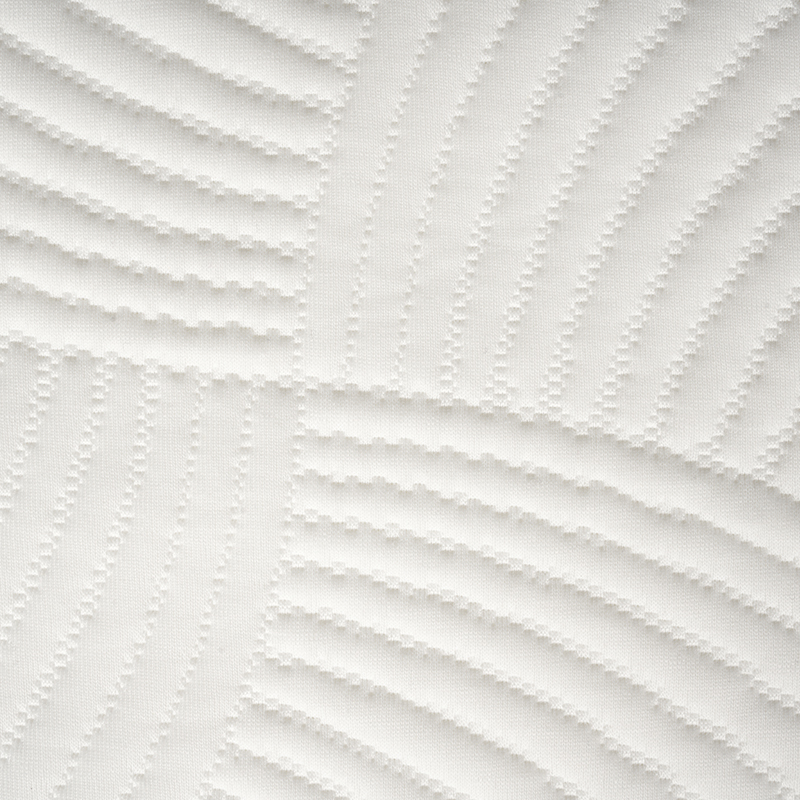
● Fabric Construction: Common weaves include plain, twill, jacquard, or knitted air-layer structures, offering diverse tactile feels and visual aesthetics.
● Finishing Options: Can be treated with flame-retardant, water-repellent, or anti-static finishes to comply with specific safety and functional standards.
● Color Fastness: Dyed or printed with good resistance to rubbing and light exposure.
Application Scenarios
● Mattress Border Fabric: Used as side paneling material, providing lateral support and displaying brand logos or design elements.
● Mattress Quilting Layer: Serves as the top quilting fabric, combined with fillings, defining the mattress's hand feel and appearance.
● Mattress Encasement: Functions as an inner cover to encase foam or spring cores, providing shaping and protection.
● Headboard Upholstery: Used for covering upholstered headboards as part of mattress set matching.
● Bedding Accessories: Suitable for matching products like mattress protectors and fitted sheets.
Related Notes
● Storage Advice: It is recommended to store flat in a dry, well-ventilated, and dark warehouse environment. Avoid prolonged heavy compression and keep away from sharp objects.
● Processing Advice: For cutting and sewing, using needles and threads suitable for synthetic fibers is recommended to achieve optimal processing results.
We Create Safe, Healthy and Comfortable Living Spaces Through Innovative Technology.
Hangzhou Xinsili Decorative Fabric Weaving Co.,Ltd. specializes in the innovative research, development, and precision manufacturing of decorative textiles.
We are China Polyester Mattress Fabric Manufacturers and Custom Polyester Mattress Fabric Factory, Exporter.
Guided by the vision of "Weaving Beautiful Spaces," we are committed to delivering high-quality, environmentally friendly decorative solutions to global clients through our stable and practical fabric products. Upholding the corporate values of "Craftsmanship-Driven Manufacturing, Design Innovation, and Win-Win Collaboration," we empower design through technological advancement and build trust with steady and reliable quality, striving to become a trusted partner in the decorative textiles industry.
Years of Industry Experience
Factory Area
Number of Employees
Annual Output
Export Volume
Provide you with the latest enterprise and industry news
Read MoreAs the foundational layer between the sleeper and the support core, the textile chosen for bedding plays a pivotal role in sleep quality and product longevity. In the highly competitive bedding manufacturing sector, Polyester Mattress Fabric has emerged as a cornerstone material, seamlessly balancing cost-effectiveness with high-performance characteristics. Driven by advanced weaving technologies and a commitment to "Weaving Beautiful Spaces," the industry continues to innovate, ensuring that modern sleep solutions meet stringent global standards for safety, hygiene, and comfort.
Understanding the technical foundation of this material requires a look at how synthetic polymers are transformed into sleep-friendly textiles. Unlike natural fibers, polyester offers unparalleled consistency in tensile strength and dimensional stability, making it an ideal candidate for high-speed mattress ticking production.
When evaluating materials for commercial and residential bedding, manufacturers must weigh various performance metrics. While natural fibers have their place, synthetic options provide engineered solutions that natural variants simply cannot match in high-wear environments.
| Performance Metric | Polyester Textiles | Traditional Cotton |
| Tensile Strength | Exceptionally high; resists stretching and tearing | Moderate; loses strength when exposed to moisture |
| Moisture Management | Can be engineered with hydrophilic wicking finishes | Naturally absorbent but retains moisture, drying slowly |
| Dimensional Stability | Highly resistant to shrinkage and warping | Prone to shrinkage, requiring careful finishing |
| Durability/Lifespan | Withstands years of compression cycles | Breaks down faster under continuous friction |
| Cost Efficiency | Highly stable pricing with scalable production | Subject to agricultural yield and market volatility |
To ensure end-user satisfaction and regulatory compliance, premium Polyester Mattress Fabric must exhibit a precise combination of physical and chemical properties. These characteristics define the difference between standard ticking and luxury-grade sleep surfaces.
The aesthetic and functional profile of a sleeping surface is largely dictated by its weave pattern and post-treatment. Selecting the correct architecture is essential for matching the fabric to the specific type of mattress, whether it is an innerspring, hybrid, or pure foam design.
Choosing between a knitted and a woven construction drastically alters the manufacturing process and the end-user experience. The following comparison aids manufacturers in specifying the correct textile for their intended mattress profile.
| Feature Specification | Knitted Polyester Mattress Fabric | Woven Polyester Mattress Fabric |
| Elongation and Stretch | High stretch (up to 30%+), excellent recovery | Minimal stretch, rigid and structured |
| Surface Texture | Smooth, soft, slightly yielding | Crisp, defined patterns, highly durable face |
| Ideal Mattress Application | Memory foam, latex, compressed roll-packed beds | Innerspring, hybrid, luxury tight-top mattresses |
| Production Speed | Slower take-up rate, higher material consumption | High-speed weaving, highly efficient material yield |
| Edge Stability | Requires overlocking to prevent curling | Naturally stable edges, easy to cut and sew |
Guided by the vision of craftsmanship-driven manufacturing, the production of modern Polyester Mattress Fabric involves stringent quality control protocols and a shift toward sustainable methodologies. This ensures that environmental responsibility does not compromise textile performance.
Absolutely. While raw polyester is inherently hydrophobic, modern manufacturing techniques have revolutionized its thermal properties. By engineering specific cross-sectional yarn shapes (such as trilobal or hollow fibers) and applying hydrophilic wicking finishes, Polyester Mattress Fabric can actively pull moisture away from the skin and facilitate rapid evaporation. Furthermore, when constructed using 3D spacer knitting or high-porosity weaves, these textiles offer exceptional airflow, outperforming many natural fibers in dry-heat dissipation and keeping the sleep surface cool.
There is virtually no compromise in performance when utilizing high-quality recycled polyester (rPET) sourced from post-consumer PET bottles. Through advanced extrusion and purification processes, rPET can achieve the exact same tenacity, elongation, and pilling resistance as virgin polymer. In fact, rPET often requires less energy to produce, reducing the carbon footprint of the textile without altering its dimensional stability or durability. Premium recycled Polyester Mattress Fabric is indistinguishable from virgin alternatives and carries the same rigorous certifications for safety and performance.
High-quality, OEKO-TEX Standard 100 certified Polyester Mattress Fabric is inherently hypoallergenic. Because the synthetic fibers are continuous filaments, they do not shed short fibers or dust in the way that natural materials like wool or low-grade cotton might. Additionally, polyester does not provide a hospitable environment for dust mites, mold, or mildew. To ensure complete safety for sensitive individuals, reputable manufacturers apply anti-microbial and anti-fungal treatments during the finishing phase and strictly limit the use of formaldehyde or harmful volatile organic compounds (VOCs) in the dyeing process.
The lifespan is exceptionally long, often outlasting the internal core components of the mattress itself. High-tenacity Polyester Mattress Fabric is engineered to withstand tens of thousands of compression and abrasion cycles without thinning, pilling, or tearing. In institutional or hospitality settings, where beds are subjected to frequent use and aggressive cleaning, polyester ticking demonstrates superior resistance to bleach, oxidizing agents, and physical friction compared to blended or natural fabrics. This structural resilience ensures the mattress maintains its aesthetic and functional integrity for 8 to 12 years under normal residential use.
Yi qiao Town, Xiaoshan District, Hangzhou City, Zhejiang Province, China
