

 English
 中文简体
 Español
 عربى
 русский



Mattress Fabric That Prevents Bed Bug Infestation: How Weave Design Works
Content
- 1 Why Mattress Fabric Is the First Line of Defense
- 2 Fabric Properties That Block Bed Bugs
- 3 Encasement Design: Why Full Coverage Matters
- 4 Matching Fabric to Every Sleep Product
- 5 Care, Inspection, and Realistic Expectations
- 6 Frequently Asked Questions
- 6.0.1 Q1: Can bed bugs bite through ordinary mattress fabric?
- 6.0.2 Q2: Does a higher thread count guarantee bed bug resistance?
- 6.0.3 Q3: How long should an encasement remain on the mattress?
- 6.0.4 Q4: Do antibacterial yarns kill bed bugs?
- 6.0.5 Q5: Which fabric suits a children's mattress best?
- 6.0.6 Q6: Is a bed bug resistant cover uncomfortable to sleep on?
Discovering bed bugs near the bed triggers an almost automatic impulse to throw the mattress away, yet in many cases that reaction is expensive and unnecessary. What really decides whether bed bugs can colonize a sleeping surface is the fabric system wrapped around it: the density of the weave, the behavior of the yarns, the sewing of the seams, and the way the textile encloses the core. Written from the perspective of a professional mattress fabric factory, this guide explains how mattress fabric prevents bed bug infestation, which construction choices matter most, and how to pair the right textile with a realistic prevention routine for hotels, dormitories, healthcare facilities, and family homes.
The logic is simple. Bed bugs must reach skin in order to feed, and they must find dark crevices in order to hide and breed. A correctly engineered fabric denies them both at once, and it does so without placing any chemicals on the sleep surface.
Why Mattress Fabric Is the First Line of Defense
Bed bugs are small, flat, wingless insects that feed on blood, usually while the host sleeps. Adults measure roughly 4 to 5 millimeters in length, and a newly hatched nymph is only about 1 millimeter, small enough to slip into a stitching hole. Their flattened bodies let them wedge into mattress seams, tufts, piping, and the junction where the fabric meets the tape edge, which is why inspections so often start at the corners of the bed.
Because bed bugs prefer to harbor within a few steps of a sleeping host, the mattress becomes their headquarters. A female lays her eggs in these protected crevices, and the colony grows in layers, deeper and deeper into the mattress core. In hotels, insects from one infested room can move to neighboring rooms through wall voids and luggage, so protecting mattresses is also a way of protecting the whole property.
4 to 5 mmAdult bed bug body length
About 1 mmFirst-stage nymph, fits a stitch hole
5 to 10 daysTypical interval between blood meals
MonthsHow long adults survive without feeding
Eggs add another dimension to the problem. A female deposits several eggs per day in hidden crevices, and each egg is coated so that it sticks deep inside seams where sprays struggle to reach. New nymphs need a blood meal to molt and grow, so a population sealed inside a mattress keeps trying to feed through the fabric. This is exactly the behavior that pore size engineering is designed to defeat.
These figures define the engineering target. A protective fabric must stop mouthparts from reaching through the surface, remove the deep crevices where insects shelter, and stay intact through months of daily use. When those three conditions are met at the textile level, the mattress stops being a habitat and becomes a smooth, sealed object that can be inspected at a glance.
It also helps to think about the mattress and its foundation together. Box springs and slatted bases often offer more hiding places than the mattress itself, so any protection plan built on fabric should enclose both components whenever possible.
Fabric Properties That Block Bed Bugs
Weave Density and Pore Size
The decisive property is pore size, the width of the open spaces between neighboring yarns, rather than the thread count printed on a label. Laboratory feeding trials test this directly: bed bugs are confined in a chamber sealed with the candidate fabric over a blood source, and researchers count how many insects succeed in feeding. Dense woven fabrics with very small, uniform openings consistently stop feeding, while loosely knit materials with wide gaps between yarn loops let the mouthparts pass.
Pore openings measured in single microns, far narrower than a human hair, are the working benchmark for bite-resistant covers. Stability matters just as much, because a fabric that loosens after stretching, flexing, or repeated laundering opens the door again. Tight weaving, heat setting, and dimensionally stable polyester filaments help the structure hold its pore size over the life of the cover. Knitted structures behave differently, because loops create larger and less predictable openings, which is why knits alone rarely pass bite tests unless they are extremely fine and tightly finished.
Buyers can demand evidence instead of adjectives. Useful documentation includes laboratory feeding or confinement results, pore measurement data, and performance reports after a defined number of laundering cycles. Mills that weave in-house can adjust loom density and finishing to reach a target pore size, which is exactly the conversation worth having before placing an order. For a broader view of how this fiber performs in bedding, see our technical analysis of polyester mattress fabric.
Woven Barriers, Bonded Membranes, and Fine Knits
Three constructions dominate bite-resistant covers. A high-density woven polyester is the classic choice: strong, dimensionally stable, and economical in large volumes. A membrane-bonded fabric laminates an ultrathin film onto a textile face, closing the pores almost completely while keeping a soft touch, and it is common on professional encasements. A fine-filament tight knit stretches easily over thick pillow-top mattresses, but it must be engineered so the loops stay closed when the fabric is under tension. Each option balances stretch, weight, vapor permeability, and price differently, so the right answer depends on whether the cover is sewn on at the factory or pulled on later as a zippered encasement.
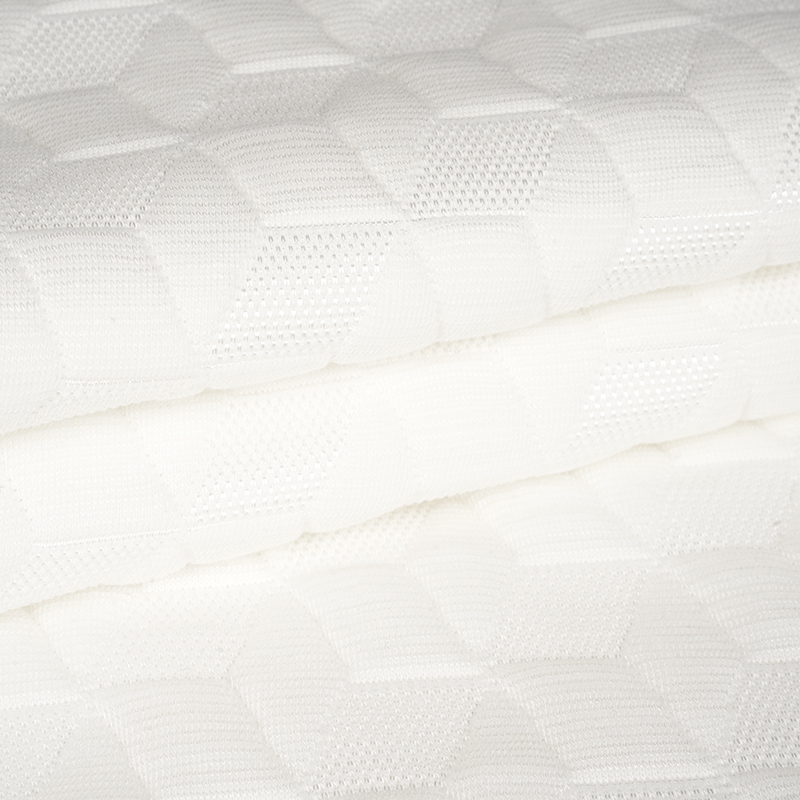 Woven Polyester Mattress FabricDense woven polyester is the classic bite-resistant barrier fabric: strong, dimensionally stable, and economical at scale. It suits both factory-sewn covers and zippered encasements for beds.View Product →
Surface Behavior and Hygienic Finishes
Surface physics matter as well. Smooth filament yarns give bed bugs fewer anchor points than fuzzy or heavily textured surfaces, which discourages insects from moving across the cover. Hygienic yarns such as antibacterial yarn do not replace the physical barrier, but they restrain bacterial growth on the surface between cleanings, a genuine advantage in hotels, hospitals, and rental housing where covers see heavy use.
The table below sums up the attributes that matter when a mattress fabric is evaluated for bed bug resistance.
| Fabric Attribute | How It Supports Prevention | Practical Notes |
|---|---|---|
| High-density woven polyester | Pores stay smaller than mouthparts | Durable and stable after laundering |
| Membrane-bonded fabric | Film closes pores almost fully | Check vapor permeability for comfort |
| Fine-filament tight knit | Stretches over thick mattresses | Loop gaps must stay closed under tension |
| Self-locking zipper and flap | Removes the main entry point | The zipper is the most common failure |
| Antibacterial yarn | Keeps the protected surface hygienic | Hygiene support, not a pest barrier |
Encasement Design: Why Full Coverage Matters
Textile properties define the raw material, but encasement design decides whether the system works in a real bedroom. Bite resistance is only useful if every face of the mattress is protected. An effective cover wraps the entire mattress and the box spring, closes with a self-locking zipper that shuts fully down to the stop, and shields the zipper track with a sealed flap. Corners, stitched seams, and valve openings are the classic failure points, so reinforced seams sewn with small, tight stitches belong to the specification itself, not to an optional upgrade.
Full enclosure also solves the problem of insects that are already inside. Bugs sealed behind the barrier cannot reach a host, cannot lay eggs undisturbed, and cannot escape back into the room. They survive for months rather than days, which is why specialists advise leaving a cover in place for at least a year, even after the room has been professionally treated. Patience is part of the product design.
Encasements also protect the investment side of the bed. A quality mattress represents a significant cost, and sealing it preserves the unit through an infestation event instead of forcing replacement. For hotel operators, the arithmetic is convincing: the price of a fitted barrier system is a fraction of replacing mattresses across dozens of rooms.
When reviewing encasement fabric with a supplier, the checklist is short and concrete:
- Bite-proof woven face with uniformly small pores
- Self-locking zipper that closes completely to its stop
- Flap or fold that covers and seals the zipper track
- Reinforced seams sewn with tight, small stitches
- Breathable, quiet surface that keeps sleep comfortable
A smooth encasement changes daily life as well. With deep crevices removed, a visual inspection of the covered mattress takes only minutes, and any insect found on the surface signals activity elsewhere in the room. The cover becomes both a barrier and a monitoring tool.
Matching Fabric to Every Sleep Product
Bed bug pressure is not uniform across the bedroom, so fabric investment should follow the risk. Insects concentrate near the head of the bed, close to the warmth and breath of the sleeper, which makes the pillow zone a priority. Children's mattresses deserve the strictest construction, because young children cannot describe bites clearly and parents need washable, hygienic surfaces. Guest beds, dormitory mattresses, and rental units face rotating occupants whose luggage can introduce insects at any time of year.
Two fabric directions cover most of these scenarios: a dense woven polyester base for the barrier itself, and hygienic yarn options for surfaces that are washed constantly.
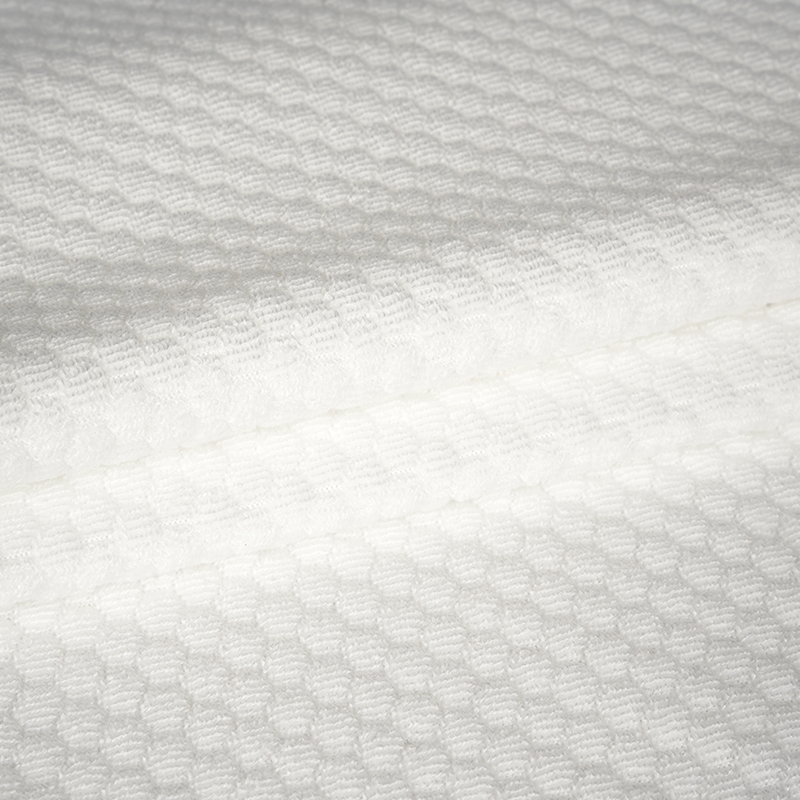 Antibacterial Yarn Mattress FabricWith antibacterial agents built into the fiber, this fabric restrains bacterial growth on heavily used mattress covers between washings, useful in hotels, hospitals, and rental housing.View Product →
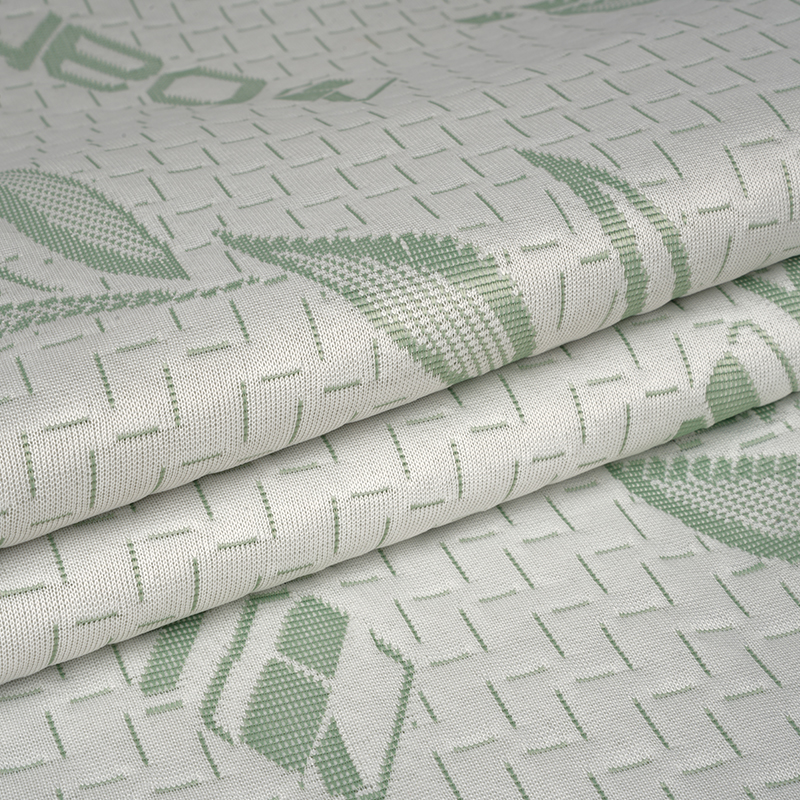 Antibacterial Yarn Pillowcase FabricAntimicrobial protection integrated into the yarn inhibits bacteria on the pillowcase surface, complements smooth washable barrier fabrics, and suits bedding that is laundered constantly.View Product →
Even pet bedding belongs in the plan. In heavily infested rooms, bed bugs will feed on pets when human hosts are unavailable, and pet beds are almost never inspected. Dense, smooth, washable fabric on pet beds and crates closes one more hiding place and removes one more blood meal.
For buyers assembling a complete sleep program, the practical approach is to keep one proven barrier construction and adapt it across applications: the same dense woven face on mattress encasements, pillow protectors, and children's covers, with hygienic yarn variants where frequent cleaning is expected. Consistency simplifies testing, purchasing, and quality control across the whole range.
Care, Inspection, and Realistic Expectations
No fabric makes a room immune by itself. A barrier cover prevents the mattress from becoming a harbor, but it does not remove insects already living in baseboards, headboards, luggage, or electrical outlets. The strongest programs combine textile protection with environmental control and, where needed, professional pest management.
A barrier works only while it stays intact: unbroken fabric, sewn seams, and closed zippers are part of the specification, and a single torn corner is an open door.
A simple maintenance routine keeps the protection alive:
- Inspect covers monthly, focusing on zipper stops and seam lines
- Launder removable bedding weekly at high heat and dry it thoroughly
- Vacuum mattress seams and the bed frame during deep cleaning
- Keep encasements on for at least twelve months after any treatment
- Replace any cover that shows tears, holes, or a failed zipper
Care instructions also protect the barrier itself. Follow the laundering temperature recommended for the fabric, avoid aggressive bleach that weakens fibers, and let covers dry completely before refitting. Treated well, a quality woven encasement tolerates years of hotel-grade laundering while keeping its pore structure intact.
Finally, keep expectations grounded. Fabric is prevention, containment, and monitoring in one layer, and it multiplies the effect of professional treatment when an infestation does appear. That combination, rather than any single product, is what keeps beds safe over the long term.
Frequently Asked Questions
Q1: Can bed bugs bite through ordinary mattress fabric?
Often they can. Loosely woven or knitted textiles leave openings wide enough for mouthparts, so a normal decorative cover offers little protection. Bite resistance requires very small, uniform pores, which normally means a dense woven construction or a bonded membrane.
Q2: Does a higher thread count guarantee bed bug resistance?
No. Thread count is only a rough indicator, and pore size after finishing and laundering is the figure that matters. Two fabrics with similar thread counts can behave very differently, so laboratory feeding data is far more meaningful than a printed number.
Q3: How long should an encasement remain on the mattress?
At least twelve months. Bed bugs trapped inside can survive for months without a blood meal, and removing the cover early may release living insects back into the room. Keep it sealed until there have been no signs of activity for an extended period.
Q4: Do antibacterial yarns kill bed bugs?
No. Antibacterial yarn limits bacterial growth on the fabric surface and supports hygiene and odor control, but it is not a pesticide. Treat it as a complement to a true physical barrier, never as a replacement for one.
Q5: Which fabric suits a children's mattress best?
A dense woven polyester or membrane-bonded cover with a self-locking zipper, combined with easy-clean properties and hygienic yarn options, is the strongest baseline for children, who need both protection and frequent washing.
Q6: Is a bed bug resistant cover uncomfortable to sleep on?
Modern barrier fabrics are engineered for comfort. Breathable woven polyester and vapor-permeable membranes allow air movement, and fine yarns keep the surface smooth and quiet, so protection no longer means sleeping on plastic the way older vinyl covers did.
Our Featured Products
-

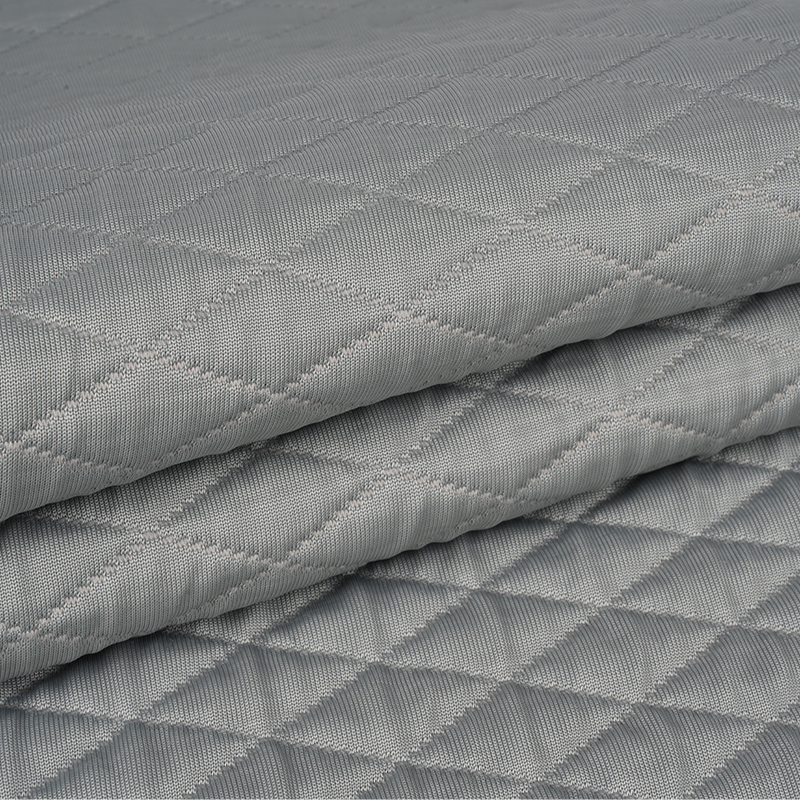
Polyester Mattress Fabric
Polyester Mattress Fabric
-
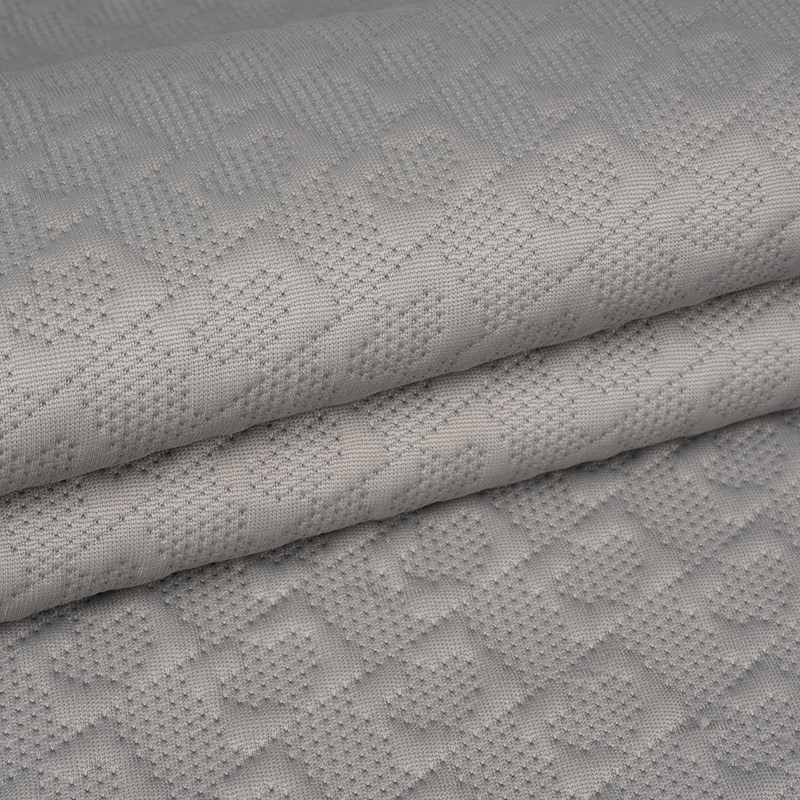
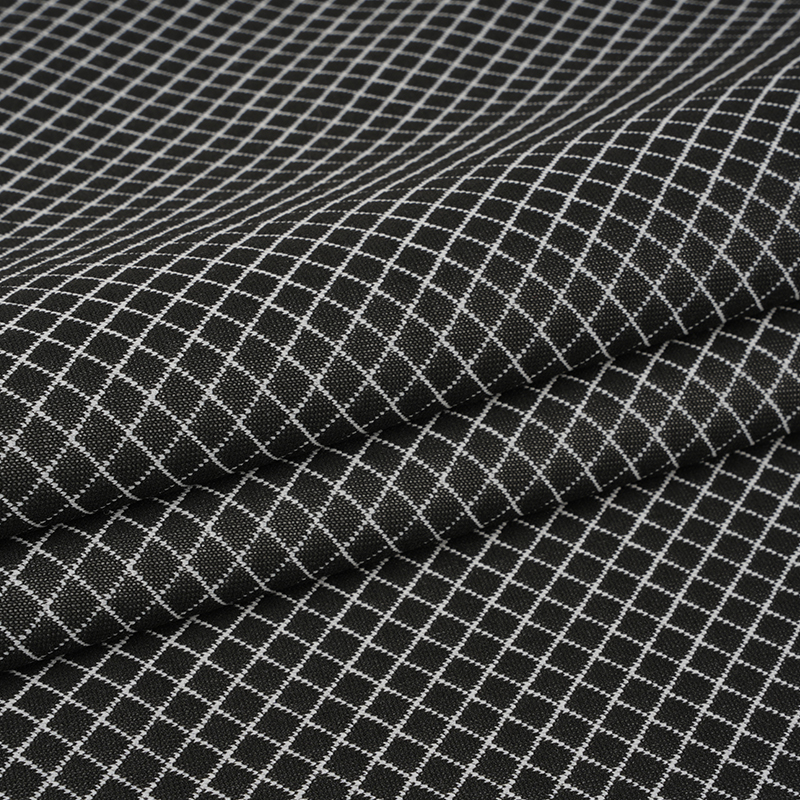
Antibacterial Yarn Children Mattress Fabric
Antibacterial Yarn Children Mattress Fabric
Haven’t Found The Products You Want?
-
-
Shen Jinyan:+86-15158070676
[email protected]
Liang Jinwen:+86-15757186621
[email protected]
Qiu Yingyingn:+86-13819545790
[email protected]
Yi qiao Town, Xiaoshan District, Hangzhou City, Zhejiang Province, China
-
Products
Mattress Fabric Children Mattress Fabric Pillowcase Fabric Pregnancy Pillow Fabric Cooling Mat Fabric Bedding Fabric Sofa Fabric Pet Friendly Fabrics -
Contact Information
About Us Products Strength Sustainability News Contact Us
Copyright © Hangzhou Xinsili Decorative Fabric Weaving Co.,Ltd. All Rights Reserved.
Functional Decorative Textile Manufacturers
