

 English
 中文简体
 Español
 عربى
 русский



How to Choose the Right Polyester Mattress Fabric: A Practical Buyer's Guide
Content
- 1 Why Polyester Dominates the Mattress Cover Market
- 2 Match the Fabric to the End Use First
- 3 Read the Specification Sheet Like an Engineer
- 4 Comfort Is Engineered, Not Assumed
- 5 Functional Yarns, Finishes, and Safety Requirements
- 6 A Practical Selection Workflow
- 7 How to Vet a Fabric Supplier Before the Bulk Order
- 8 Common Selection Mistakes to Avoid
- 9 Frequently Asked Questions
The fabric on the surface of a mattress is the first thing a customer touches, and in most entry and mid-range programs that surface is polyester. It is strong, dimensionally stable, inexpensive to dye and print, and compatible with nearly every high-speed quilting line in volume production. Yet two polyester fabrics with identical fiber content can behave completely differently once they are quilted, washed, and slept on every night.
This guide approaches choosing the right polyester mattress fabric the way a product engineer would: match the construction to the end use, read the specification sheet critically, separate marketing claims from testable performance, and stress-test the supplier before committing to a bulk order. The goal is a cover that still looks and performs well after years of real bedrooms, not just on a showroom sample card.
Why Polyester Dominates the Mattress Cover Market
Polyester earns its place as the default mattress covering for practical reasons. The fiber offers high tensile strength and abrasion resistance, holds its shape through humidity swings, resists mildew, and accepts vivid, repeatable color in high-volume dye houses. Because polyester accounts for more than half of global fiber production, the supporting ecosystem of spinners, knitters, and finishers is deep, which translates into shorter sampling cycles and broad customization: jacquard knits, embossed wovens, and printed patterns are all available at commercial minimums. It also quilts cleanly at high line speeds and sews without splitting, which matters when a single cover passes through hundreds of stitches per unit.
The trade-off is moisture behavior. Polyester absorbs very little water, so it dries quickly and resists odor, but perspiration can linger between fibers if the structure traps air poorly. That is not a reason to avoid the fiber; it is a reason to engineer around it with open knits, quilt loft, and moisture-management finishes, covered in the sections below.
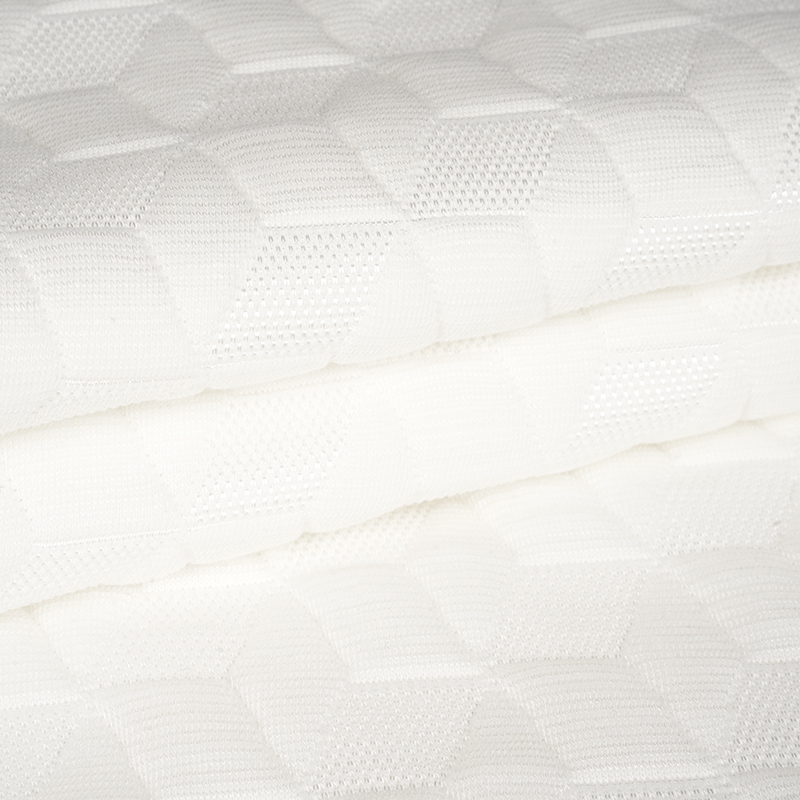 Polyester Mattress Fabric for Borders and Quilted LayersMade from polyester or polyester-spandex blends, this fabric offers dimensional stability, durability, and easy care for mattress tops, borders, and encasements. It suits buyers engineering around polyester's quick-drying, low-moisture behavior before choosing a construction.View Product →
Match the Fabric to the End Use First
The most common sourcing error is choosing a fabric before defining the product it will cover. A quilted showpiece top panel, a taut border, a child's mattress, and a summer cooling mat impose very different demands on the same fiber. Let the application set the construction, weight, and finish before you fall in love with a hand feel.
| Application | Typical Build | Primary Priority |
|---|---|---|
| Adult top panels | Knitted polyester, 220 to 300 GSM | Stretch and hand feel |
| Borders and tape edge | Woven polyester, 180 to 250 GSM | Abrasion resistance |
| Children's mattresses | Soft knits or blends, 220 to 280 GSM | Washability and skin feel |
| Cooling mats | Smooth filament knits, 160 to 240 GSM | Cool touch and easy care |
| Pet beds | High-denier wovens, 250 GSM and up | Claw and tear resistance |
Standard Adult Mattresses
Knitted polyester is the default for quilted top panels because it stretches over foam and fiber fills, conforms during quilting, and delivers a plush initial feel. Weights between 220 and 300 GSM usually balance drape with durability. Save wovens for borders and tape edges, where dimensional stability and abrasion resistance matter more than stretch.
Children's Mattresses
Children's covers face frequent washing and close skin contact, so experienced buyers tighten limits on pilling, dimensional change, and harmful substances. Soft knits around 220 to 280 GSM work well, and blends that combine polyester with cotton or bamboo fiber can soften the surface without giving up the shape retention and value of a polyester base.
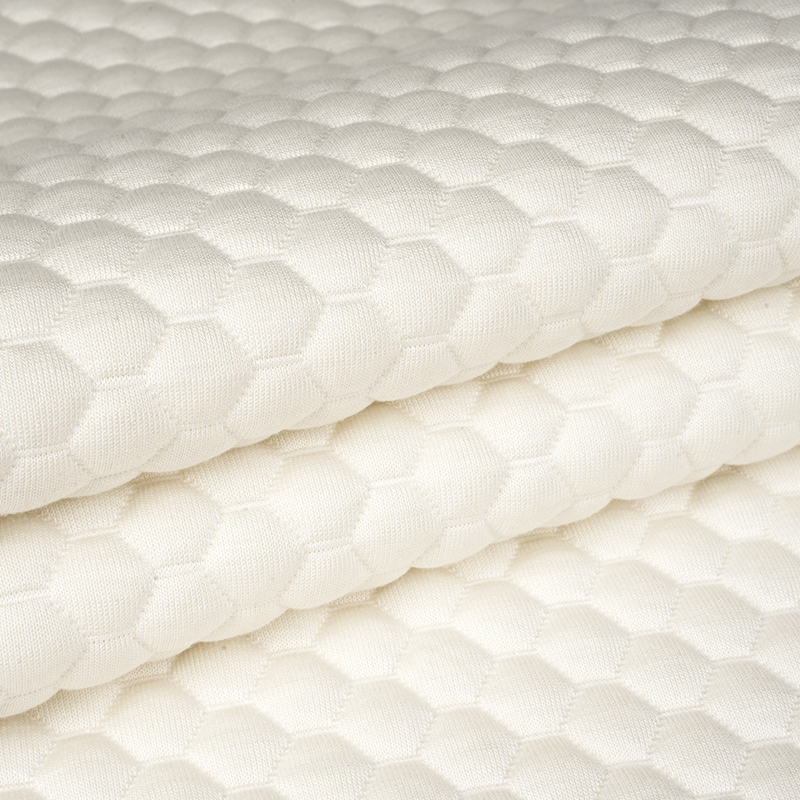 Polyester Children Mattress Fabric in Soft KnitsA knitted air-layer fabric blending polyester with spandex for stability and elasticity, free of natural-fiber allergens and suited to frequent washing. A practical choice for children's covers where pilling control and shape retention matter.View Product →
Cooling and Seasonal Lines
Summer covers and cooling mats use smooth filament polyester or ice-silk-touch yarns at lighter weights, roughly 160 to 240 GSM, where cool contact and fast drying outrank plushness. Because these products are often rolled and stored between seasons, crease recovery and easy care deserve as much attention as the cooling claim itself.
 Polyester Cooling Mat Fabric for Summer BeddingLightweight knitted or woven polyester with low moisture absorption and wicking texture for cool contact and fast drying. Ideal for summer covers and cooling mats that need crease recovery and easy care between seasons.View Product →
Read the Specification Sheet Like an Engineer
A swatch tells you how a fabric feels today; a specification tells you how it will behave for the life of the mattress. Four families of numbers decide most of the outcome, and none of them appear in a photograph.
180 to 250 GSMtypical woven cover weight
220 to 300 GSMtypical knitted cover weight
Grade 4 or higherpilling and colorfastness target
Under 5 percentacceptable dimensional change
Tie every number on the sheet to a named test method, and ask for the underlying report rather than a summary. The table below lists the values that separate professional-grade mattress tickings from commodity cover stock.
| Specification | Why It Matters | Common Target |
|---|---|---|
| Fabric weight (GSM) | Balances cost, drape, and durability | 180 to 300 GSM |
| Pilling resistance | Prevents surface fuzz and bobbling | Grade 4 or higher |
| Colorfastness to wash and rub | Keeps colors true after cleaning | Grade 4 or higher |
| Dimensional change | Maintains fit over the quilted core | Within 5 percent |
| Yarn denier | Controls smoothness and strength | 75D to 150D filament |
| Composition tolerance | Confirms what you actually paid for | Within 3 percent of label |
Treat any supplier who cannot produce current reports for pilling, colorfastness, and dimensional change as a higher-risk source, regardless of how attractive the price looks.
Comfort Is Engineered, Not Assumed
Because polyester absorbs little moisture, perceived warmth has more to do with structure than with fiber chemistry. Water vapor that cannot escape pools in the quilt cavity, and the sleeper blames the fabric. The working levers are structural: more open knit gauges, quilt patterns that preserve loft, spacer or mesh side borders that vent the perimeter, and wicking finishes that pull moisture off the skin so it can evaporate. Independent textile labs routinely measure large differences in airflow between otherwise similar covers, which is why two same-weight samples can feel noticeably different in a hot room.
Surface blends are the second lever. Combining polyester with cellulose-based yarns such as tencel or bamboo fiber adjusts moisture handling and skin feel while the polyester base keeps cost and dimensional stability on target. The right mix depends on your price band and target climate, which is exactly why it should be settled with wear trials rather than catalog descriptions. For a deeper look at how these variables interact, this technical analysis of polyester mattress fabric durability and breathability is a practical reference.
A fabric that feels premium on a sample card can still fail in production, so always evaluate full-width rolls finished under normal running conditions.
Functional Yarns, Finishes, and Safety Requirements
Functional polyester comes in two forms, and they age very differently. Yarn-level functions, such as antibacterial yarn and mineral or graphene-infused filaments, build the property into the fiber itself, so performance survives repeated laundering far better than surface coatings do. Topical finishes are cheaper and faster to sample, but their wash durability must be proven rather than promised.
Ask one question for every functional claim: what independent test report exists, and was the fabric tested before and after multiple wash cycles? Claims that survive that question are worth paying for; claims that cannot should be treated as decoration. Also confirm early how the cover interacts with your flame-resistance strategy, since major markets such as the United States and the United Kingdom impose open-flame or cigarette-resistance requirements on finished mattresses, and fabric weight, construction, and finish all affect how easily the assembly passes.
A Practical Selection Workflow
The sequence below compresses the decision into a repeatable process. Its value is discipline: every branch ends in physical evidence rather than opinion.
Figure 1. A repeatable workflow for narrowing polyester mattress fabric options to a verified choice.
How to Vet a Fabric Supplier Before the Bulk Order
Samples should come from current production, not from a made-to-impress swatch card. Request a full-width roll from a recent dye lot, inspect it edge to edge for shading, and run a lab dip before approving any custom color. A supplier who hesitates at this step is telling you something about the consistency you will receive at volume.
Before committing, tour or audit the facility, review third-party test reports, and run the fabric through your own quilting machine at production speed to check for shrinkage mismatch, needle cutting, and puckering. Agree on retained reference samples for every shipment, and confirm minimums, lead times, and the remedy for defective rolls in writing. A short pilot order remains the cheapest insurance in the mattress business.
If you are still comparing surfaces at the category level, this overview of the best mattress material for comfort and support helps frame the shortlist before you narrow the field to polyester builds.
Common Selection Mistakes to Avoid
- Buying on weight alone: at the same GSM, denier and knit gauge change stiffness, drape, and hand completely.
- Ignoring quilting compatibility: mismatched shrinkage between cover and backing puckers seams after the first wash.
- Judging from palm-sized swatches: full rolls reveal shading, tension marks, and width issues that small samples hide.
- Skipping wash and rub tests on final colors: deep shades often behave differently from lab standards.
- Discovering flame-resistance conflicts after tooling: confirm market requirements during development, not after.
- Funding unverified claims: any function without a before-and-after wash report is a cost, not a feature.
Choosing polyester mattress fabric is not a hunt for a single winning swatch; it is a process of aligning construction with end use, demanding verifiable numbers, and testing under real conditions before money moves. Buyers who apply that discipline consistently land covers that feel premium on day one and still hold their shape, color, and comfort years later, at a cost the market can bear.
Frequently Asked Questions
Q1: What GSM is best for polyester mattress fabric?
There is no single correct number. Quilted adult top panels commonly sit between 220 and 300 GSM for a plush hand, borders and utility wovens between 180 and 250 GSM for stability, and cooling or seasonal knits between 160 and 240 GSM for contact coolness. Match the weight to the construction and price band rather than chasing one universal figure.
Q2: Is knitted or woven polyester better for a mattress cover?
They solve different problems. Knits stretch, conform to quilting, and feel plush, which makes them ideal for top panels. Wovens hold dimension and resist abrasion, which suits borders, tape edges, and pet-facing utility fabrics. Most complete mattress programs use both in different positions.
Q3: Does polyester mattress fabric sleep hot?
The fiber itself absorbs little moisture, so heat complaints usually trace to structure and climate rather than chemistry. Open knits, loft-preserving quilt patterns, vented borders, and wicking or cool-touch yarns manage perceived temperature effectively, and blends with cellulose fibers can further adjust the surface feel.
Q4: How do I verify antibacterial or cooling claims?
Ask for independent test reports and, critically, confirm whether the fabric was tested after repeated wash cycles rather than only in its finished state. Yarn-level functions generally retain performance longer than topical finishes, and reputable suppliers provide method names and results without prompting.
Q5: What should I confirm before placing a bulk order?
Run a pilot on your own quilting line, retain signed reference samples, review current third-party reports for pilling, colorfastness, and dimensional change, and agree in writing on minimums, lead times, and remedies for defective rolls. These steps cost days and prevent months of disputes.
Our Featured Products
-

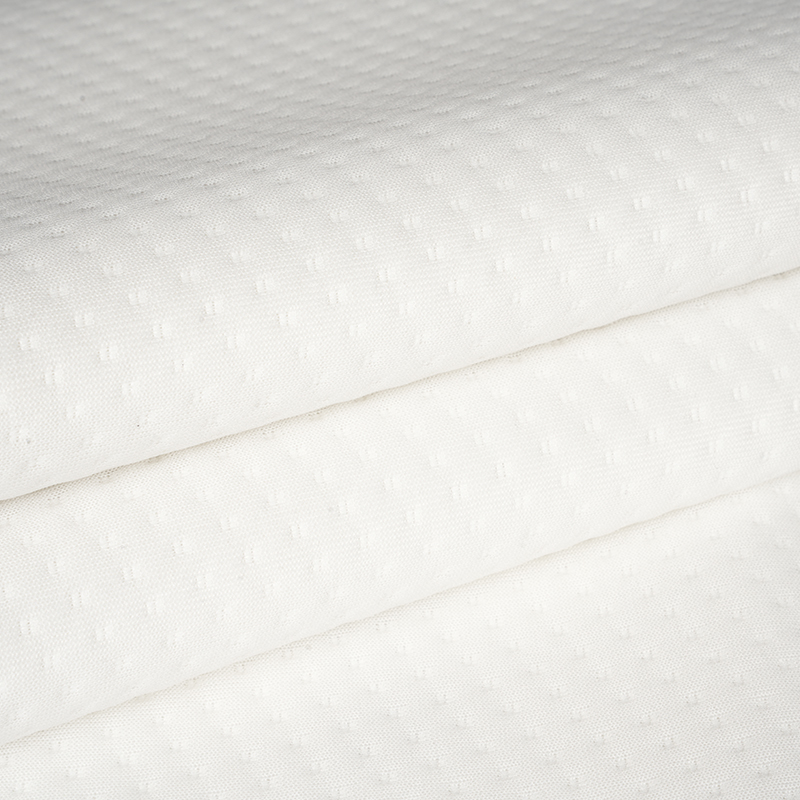
Polyester Mattress Fabric
Polyester Mattress Fabric
-
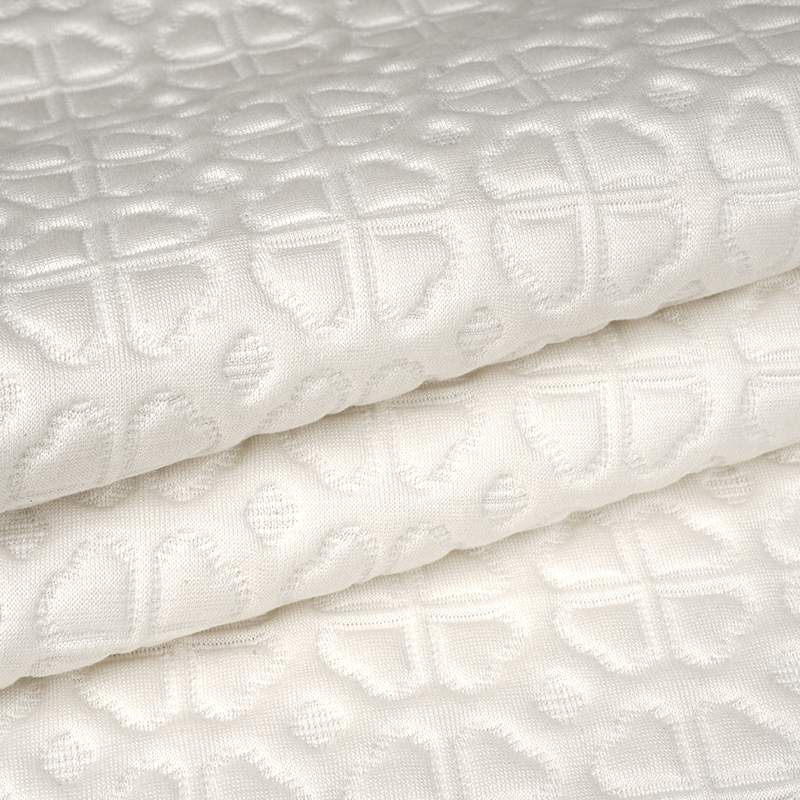
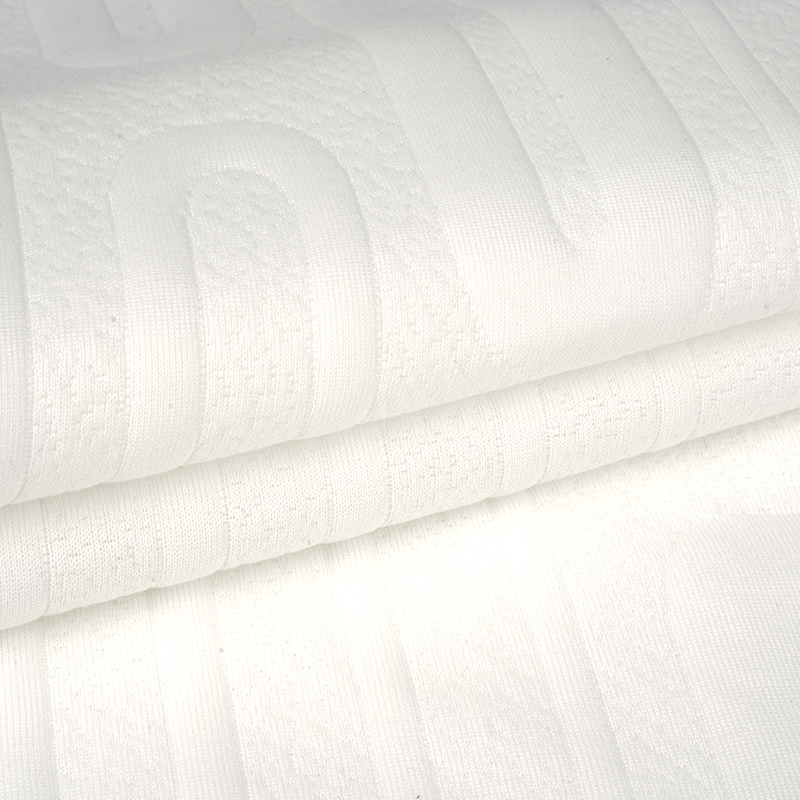
Antibacterial Yarn Children Mattress Fabric
Antibacterial Yarn Children Mattress Fabric
-
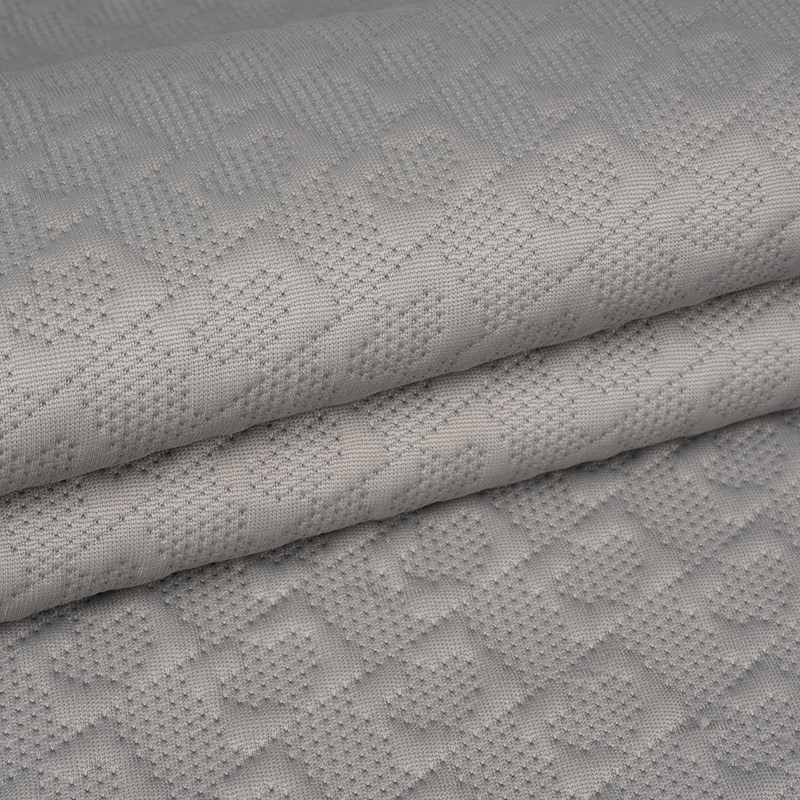
Antibacterial Yarn Children Mattress Fabric
Antibacterial Yarn Children Mattress Fabric

Haven’t Found The Products You Want?
-
-
Shen Jinyan:+86-15158070676
[email protected]
Liang Jinwen:+86-15757186621
[email protected]
Qiu Yingyingn:+86-13819545790
[email protected]
Yi qiao Town, Xiaoshan District, Hangzhou City, Zhejiang Province, China
-
Products
Mattress Fabric Children Mattress Fabric Pillowcase Fabric Pregnancy Pillow Fabric Cooling Mat Fabric Bedding Fabric Sofa Fabric Pet Friendly Fabrics -
Contact Information
About Us Products Strength Sustainability News Contact Us
Copyright © Hangzhou Xinsili Decorative Fabric Weaving Co.,Ltd. All Rights Reserved.
Functional Decorative Textile Manufacturers
