

 English
 中文简体
 Español
 عربى
 русский



Why Polyester Fabric Dominates the Maternity Pillow Market: A Guide for Technical Buyers
Content
- 1 Why Polyester Is the Dominant Fabric Choice for Pregnancy Pillows
- 2 Key Technical Specifications B2B Buyers Must Verify
- 3 Polyester vs Cotton vs Bamboo Pregnancy Pillow Fabric: A Sourcing Comparison
- 4 How to Evaluate a Polyester Pregnancy Pillow Fabric Supplier
- 5 Procurement Decision Flow for Polyester Pregnancy Pillow Fabric
- 6 Frequently Asked Questions
- 6.0.1 Q1: Is polyester fabric safe for pregnancy pillows?
- 6.0.2 Q2: What is the best GSM for pregnancy pillow fabric?
- 6.0.3 Q3: Can polyester pregnancy pillow fabric be OEKO-TEX certified?
- 6.0.4 Q4: What is the MOQ for custom polyester maternity pillow fabric?
- 6.0.5 Q5: How do I request a fabric sample?
- 6.0.6 Q6: What is the typical lead time for bulk polyester pregnancy pillow fabric?
- 7 Next Step: Build Your Spec Sheet Before You Ask for a Price
Why Polyester Is the Dominant Fabric Choice for Pregnancy Pillows
Walk through any maternity product catalog and count the fabric tags. Polyester appears on the majority of pregnancy pillow covers, and that is not an accident of marketing. It is a procurement decision driven by yield per meter, color consistency across repeat orders, and the ability to hold a printed pattern without bleeding. For B2B buyers, the material story matters far less than the supply chain story: can this fabric arrive on spec, on time, and at a cost that leaves room for retail margin?
Polyester offers a structural advantage that cotton and bamboo struggle to match at scale: predictable shrinkage. A woven polyester greige good typically shrinks less than 2 percent after finishing when processed under controlled tension, whereas cotton can vary by 4 to 6 percent depending on staple length and mill conditions. That variance forces pattern makers to add tolerance, which wastes fabric and inflates cost per unit. When you are cutting thousands of C-shaped or U-shaped pillow covers per month, a 3 percent difference in shrinkage translates into real money.
Beyond dimensional stability, polyester accepts dispersed dyes at lower temperatures than cotton requires for reactive dyes. This reduces energy cost per meter and shortens dyeing cycles, which matters when you are trying to compress lead times. It also means brighter, more saturated colors are achievable without the shade drift that plagues natural fibers across lots.

The recycled polyester option has shifted from niche to mainstream in the last five years. rPET filament yarn made from post-consumer bottles now carries a price premium of roughly 8 to 15 percent over virgin polyester, but it unlocks access to retail programs that mandate recycled content. If your brand customers sell through large online marketplaces or European retailers, that premium is often non-negotiable. The key is verifying the chain of custody: a Global Recycled Standard certificate is the baseline, not a differentiator.
For a deeper look at the finished fabric options, see the full range of polyester pregnancy pillow fabric specifications available for sampling.
Key Technical Specifications B2B Buyers Must Verify
Before you request a price, you need to know what you are pricing. Polyester pregnancy pillow fabric is not a single product. It is a range defined by weight, construction, hand feel, and compliance. The table below outlines the primary variables and their practical implications for pillow manufacturing.
| Specification | Typical Range | Impact on Finished Pillow |
|---|---|---|
| GSM (grams per square meter) | 120 to 280 | Lower GSM yields softer drape but less opacity; higher GSM adds durability and print surface stability |
| Construction | Knit or woven | Knit provides stretch for contoured covers; woven offers dimensional stability and crisp printing |
| Yarn type | Filament or spun | Filament is smoother and stronger; spun offers a cotton-like hand feel at lower cost |
| Width | 150 cm to 280 cm | Wider goods reduce cutting waste for large C-shaped panels |
| Certification | OEKO-TEX, REACH, GRS | Mandatory for EU and North American retail compliance |
GSM: The Number That Defines Hand Feel and Durability
For pregnancy pillow covers, the sweet spot for most B2B programs sits between 160 and 220 GSM. Below 160 GSM, the fabric can feel flimsy and may become translucent against a dark pillow insert. Above 220 GSM, you gain durability and a premium hand feel, but you also increase fabric cost per unit and may reduce breathability if the construction is too tight.
A 180 GSM brushed polyester knit is a common choice for contoured body pillows because it combines softness with enough body to resist pilling after repeated washing. A 200 GSM woven polyester is more common for removable covers that feature elaborate digital prints, since the tighter surface accepts ink with less dot gain.
Knit vs Woven: Matching Construction to Pillow Geometry
Pregnancy pillows are not rectangular. They are C-shaped, U-shaped, or wedge-shaped, and each geometry places different demands on the fabric. A knit fabric with 15 to 25 percent stretch allows the cover to conform to curved seams without puckering. A woven fabric, by contrast, has minimal stretch and requires more precise pattern drafting, but it holds a flat shape better and does not bag out at stress points.
If your pillow design includes a zipper closure, woven fabric is generally easier to sew without wave. If your design uses a slip-on cover with no closure, a knit with good recovery is more forgiving.
Breathability and the Polyester Heat Myth
The claim that polyester sleeps hot is rooted in old data from continuous filament fabrics with no moisture management. Modern polyester pregnancy pillow fabric can be engineered with hollow fibers or profiled cross-sections that create capillary channels. These channels move moisture vapor away from the skin surface faster than a comparable cotton plain weave.
Independent lab tests using moisture vapor transmission rate (MVTR) show that a 160 GSM polyester knit with a hollow filament structure can achieve an MVTR of 800 to 1,200 g/m2/24h, which is within the range of many cotton knits used in bedding. The key is specifying the fiber type, not just the polymer.
Certifications That Function as Supplier Filters
Three certifications appear repeatedly in B2B inquiries for pregnancy pillow fabric:
- OEKO-TEX Standard 100: Tests for harmful substances at the finished fabric stage. Required by most EU retailers and many North American brands.
- REACH: European Union regulation on chemicals. A supplier claiming REACH compliance should provide a recent test report from a third-party lab.
- Global Recycled Standard (GRS): Required if the fabric contains recycled polyester and the brand wants to make a recycled content claim.
Do not accept a certificate without checking the scope. A mill may hold OEKO-TEX for one fabric quality but not for the specific GSM or color you are ordering. Always request a certificate that names the product code or a letter of confirmation from the certification body.
Polyester vs Cotton vs Bamboo Pregnancy Pillow Fabric: A Sourcing Comparison
B2B buyers rarely ask which fabric is best in absolute terms. They ask which fabric is best for a given price point, retail channel, and performance requirement. The comparison below frames the decision around procurement criteria rather than consumer preference.
| Criterion | Polyester | Cotton | Bamboo Viscose |
|---|---|---|---|
| Cost per meter (typical) | Low to mid | Mid to high | High |
| Color fastness to washing | Excellent | Good | Moderate |
| Wrinkle resistance | Excellent | Poor | Moderate |
| Machine wash durability | High | Moderate | Low to moderate |
| Skin sensitivity risk | Low with certified grades | Very low | Very low |
| Printability | Excellent with disperse dyes | Good with reactive dyes | Moderate |
The conclusion is not that polyester is universally superior. It is that polyester is the better procurement choice when the program requires high wash durability, consistent color across large lots, and a cost structure that supports promotional pricing. Cotton remains a strong option for premium natural-fiber positioning, and bamboo viscose works for brands targeting a sustainability narrative with a higher retail price ceiling.
One practical note: if you are blending polyester with cotton to reduce cost, verify the blend ratio before you quote your customer. A 60/40 poly-cotton blend behaves differently from a 50/50 blend in shrinkage and dye uptake. The difference is large enough to cause a failed lab test if the spec is not locked.
How to Evaluate a Polyester Pregnancy Pillow Fabric Supplier
Supplier evaluation is where most sourcing projects succeed or fail. The following checklist is built around the questions that separate a trading company from a mill, and a mill from a mill that can actually service a B2B account.
Sampling Capability
Ask whether the supplier can provide a short-run sample of 5 meters or less in the exact construction you need. A mill that insists on a 50-meter minimum for a sample is not set up for development work. A mill that can deliver a 3-meter sample in 7 to 10 days is a better fit for brands that iterate on color and hand feel.
MOQ and Price Tiers
MOQ in this category typically ranges from 500 to 3,000 meters per color, per construction. Price tiers usually break at 1,000 meters, 3,000 meters, and 5,000 meters. Be cautious of a supplier that offers a very low MOQ but cannot hold the price at repeat order. The first order is a test; the second order is the real relationship.
Color Customization and Print Capability
If your brand requires a specific Pantone color, ask for a lab dip before you place a bulk order. A lab dip is a small piece of dyed fabric that shows the target color. It should be evaluated under D65 lighting, not office lighting. For printed patterns, ask for a strike-off, which is a sample of the print on the actual fabric quality you will be using.
Lead Time and Capacity Stability
Lead time for polyester pregnancy pillow fabric from a Chinese mill typically runs 25 to 40 days for bulk production after lab dip approval. Add 7 to 10 days for lab dip and strike-off approval if you are developing a new color or print. If a supplier quotes 15 days for a custom color, ask how they are compressing the dyeing cycle. The answer will tell you whether they are using a stock color or cutting corners.
Test Reports and Performance Data
Request the following test reports before you commit to a bulk order:
- Tensile strength and tear strength
- Color fastness to washing, rubbing, and light
- Dimensional stability after 3 home launderings
- Fiber composition verification
- OEKO-TEX or equivalent chemical safety certificate
A supplier who hesitates on these requests is a supplier who has not invested in quality control. That hesitation is a data point.
Procurement Decision Flow for Polyester Pregnancy Pillow Fabric
The SVG diagram below maps the sequence from initial specification to bulk order. Use it as a checklist when you are coordinating between design, sourcing, and quality teams.
Frequently Asked Questions
Q1: Is polyester fabric safe for pregnancy pillows?
Yes, when it is certified to a recognized chemical safety standard such as OEKO-TEX Standard 100. The safety concern with polyester is not the polymer itself but residual processing chemicals, which certified grades test for and limit. For sensitive skin applications, specify a fabric with no heavy metal dyes and a pH value between 4.0 and 7.5.
Q2: What is the best GSM for pregnancy pillow fabric?
For most B2B programs, 160 to 220 GSM is the practical range. A 180 GSM knit is a common choice for soft, contoured covers. A 200 GSM woven is preferred for printed covers that need a flat, stable surface. Below 150 GSM, durability and opacity become concerns. Above 250 GSM, the fabric may feel stiff and cost per unit rises without a corresponding benefit in this application.
Q3: Can polyester pregnancy pillow fabric be OEKO-TEX certified?
Yes. OEKO-TEX Standard 100 applies to textile articles at all processing stages, including finished polyester fabric. The certification is issued to a specific product or product group, so always verify that the certificate covers the exact GSM, construction, and color range you are ordering.
Q4: What is the MOQ for custom polyester maternity pillow fabric?
MOQ varies by mill and by whether the color is a stock shade or a custom match. For custom colors, a typical MOQ is 500 to 1,000 meters per color. For stock colors, some suppliers will accept 300 meters. If a supplier quotes an MOQ below 300 meters for a custom dye lot, confirm whether they are dyeing to order or pulling from existing stock.
Q5: How do I request a fabric sample?
Provide the supplier with your target GSM, construction, width, color reference, and certification requirement. Ask for a sample of at least 3 meters so you can test sewing, washing, and hand feel. A sample kit that includes a technical spec sheet and a swatch of each available quality is more useful than a single cut piece.
Q6: What is the typical lead time for bulk polyester pregnancy pillow fabric?
After lab dip approval, bulk production typically takes 25 to 40 days. Add 7 to 10 days for sample approval if you are developing a new color or print. Shipping time depends on the destination and mode. For time-sensitive programs, ask whether the mill can reserve capacity before the deposit is paid.
Next Step: Build Your Spec Sheet Before You Ask for a Price
The most common mistake B2B buyers make with polyester pregnancy pillow fabric is requesting a price before defining the specification. A price without a GSM, construction, width, and certification requirement is not a price. It is a guess. Use the checklist below to prepare a request that a mill can quote accurately and quickly.
- Target GSM and tolerance range
- Knit or woven, with stretch percentage if knit
- Fabric width in centimeters
- Color reference, ideally a Pantone TCX number
- Certification requirement, such as OEKO-TEX or GRS
- Estimated order quantity per color
- Required delivery window and destination port
A complete spec sheet reduces back-and-forth, shortens the sampling cycle, and gives you a basis for comparing suppliers on the same terms. That is the foundation of a sourcing decision that holds up after the first container arrives.
Our Featured Products
-
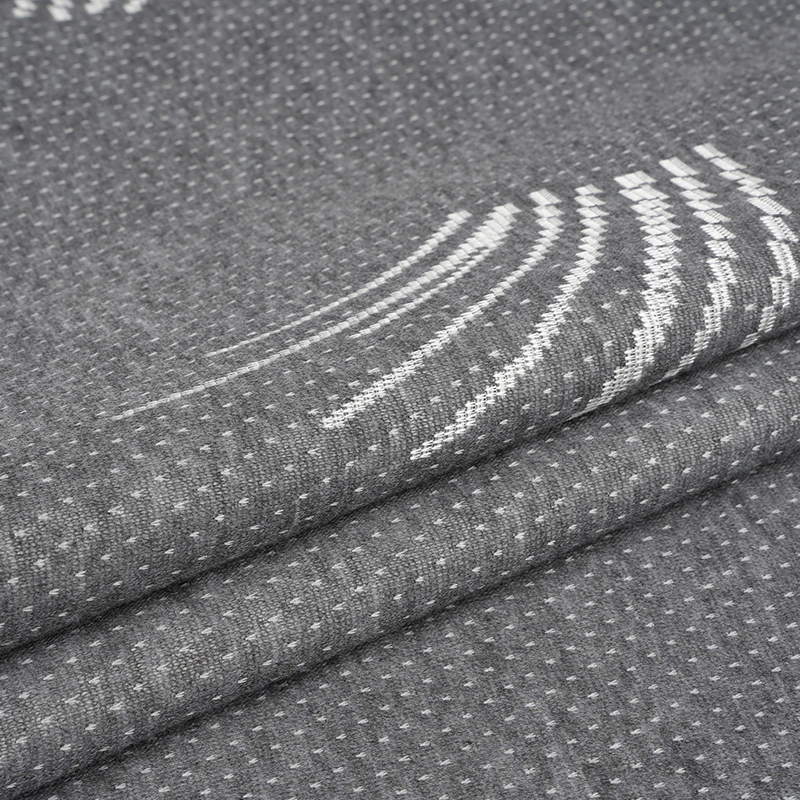
Antibacterial Yarn Pillowcase Fabric
Antibacterial Yarn Pillowcase Fabric
Haven’t Found The Products You Want?
-
-
Shen Jinyan:+86-15158070676
[email protected]
Liang Jinwen:+86-15757186621
[email protected]
Qiu Yingyingn:+86-13819545790
[email protected]
Yi qiao Town, Xiaoshan District, Hangzhou City, Zhejiang Province, China
-
Products
Mattress Fabric Children Mattress Fabric Pillowcase Fabric Pregnancy Pillow Fabric Cooling Mat Fabric Bedding Fabric Sofa Fabric Pet Friendly Fabrics -
Contact Information
About Us Products Strength Sustainability News Contact Us
Copyright © Hangzhou Xinsili Decorative Fabric Weaving Co.,Ltd. All Rights Reserved.
Functional Decorative Textile Manufacturers
