

 English
 中文简体
 Español
 عربى
 русский



How Does Antibacterial Yarn Mattress Fabric Work? A Fiber-Level Guide for Buyers
Content
- 1 What Makes Antibacterial Yarn Different from Treated Fabric?
- 2 The Mechanism: How Antibacterial Yarn Inhibits Bacteria at the Fiber Level
- 3 What Bacteria Does It Target in a Mattress Environment?
- 4 Key Performance Metrics Buyers Should Verify Before Ordering
- 5 Why Mattress Brands Are Switching to Antibacterial Yarn, Not Just Add-Ons
- 6 FAQ
What Makes Antibacterial Yarn Different from Treated Fabric?
When buyers search for antibacterial yarn mattress fabric, the first question is usually not about bacteria at all. It is about durability. How can a mattress fabric claim antibacterial performance and still hold that claim after fifty industrial washes, years of body pressure, and constant contact with sweat and skin flakes?
The answer starts with a structural difference that most marketing pages ignore: where the antimicrobial agent lives. In conventional antibacterial finishing, the agent is applied to the surface of a finished fabric as a coating or padding. In antibacterial yarn, the agent is embedded inside the fiber itself during spinning. This type of yarn is not a fabric that has been treated; it is a fabric built from functional fibers.
This distinction matters because mattress fabric is not a disposable textile. It is a long-life component of a high-value product. Surface treatments degrade with abrasion and washing. Fiber-level modification does not wash off, because the active agent is part of the yarn cross-section rather than a layer sitting on top of it.
| Aspect | Antibacterial Finishing | Antibacterial Yarn |
|---|---|---|
| Where agent resides | Surface coating | Inside fiber cross-section |
| Wash durability | Declines after repeated washes | Retained through fabric life |
| Abrasion resistance | Surface wear removes function | Interior agent remains active |
| Process stage | Post-production | Fiber spinning stage |
For a procurement team, this table is the core of the evaluation. If a supplier cannot state whether the antibacterial function comes from finishing or from the yarn, the specification is incomplete. The rest of this guide explains how the fiber-level mechanism works, what it targets in a mattress environment, and which numbers to verify before placing an order.
The Mechanism: How Antibacterial Yarn Inhibits Bacteria at the Fiber Level
Understanding how antibacterial yarn works requires looking at three stages: how the agent enters the yarn, how it acts on the fabric surface, and why the effect survives washing. Each stage answers a different buyer concern.
Step 1 - Antimicrobial Agents Embedded in the Yarn Cross-Section
In a modified yarn, the antimicrobial agent is added during the fiber formation stage, not applied afterward. Silver-based, zinc-based, or bio-based additives are compounded into the polymer before extrusion. The result is a filament or staple fiber in which the active agent is distributed throughout the cross-section.
This distribution is not uniform by accident. It is a deliberate design choice. If the surface of the fiber is abraded during weaving, knitting, or years of use, the exposed interior still contains active agent. The yarn does not depend on a single outer layer to function. For a mattress fabric that will be stretched over springs, quilted with foam, and subjected to body weight, this internal reserve is the practical difference between a claim and a performance.
From a specification standpoint, buyers should ask whether the yarn is solution-modified or masterbatch-modified. Both place the agent inside the fiber, but the dispersion quality differs. A supplier who can describe the compounding method and provide a fiber cross-section image is already more credible than one who only offers a finish label.
Step 2 - Contact-Based Inhibition on the Fabric Surface
Once the fabric is in use, the mechanism becomes a surface event. Bacteria that land on the mattress fabric come into contact with the yarn surface. Moisture from sweat or ambient humidity allows a controlled release of antimicrobial ions from the fiber. These ions interfere with bacterial cell wall integrity and enzyme systems, which inhibits growth and reproduction.
The key phrase here is contact-based. The mechanism does not require light activation, and it does not require the fabric to be soaked. It works in the dark interior of a mattress, under a bedsheet, in a bedroom with curtains drawn. This is essential because mattress fabric spends most of its life in conditions that are warm, slightly humid, and unexposed to sunlight. A photocatalytic antibacterial finish would be poorly suited to this environment. A contact-based yarn is suited to it by design.
Another practical point for buyers: contact-based inhibition does not need a high concentration of agent to be effective. It needs availability at the surface. A well-made yarn balances retention and release so that the agent is not exhausted in the first month of use. This balance is a formulation skill, and it is one of the reasons two yarns with the same additive type can perform very differently in a wash test.
Step 3 - Why the Effect Survives Repeated Washing
Wash durability is the single most common failure point in antibacterial mattress fabric claims. A surface finish may pass a lab test on the first day and fail after twenty home launderings. The industry has been moving away from this weakness for years. Functional home textiles are shifting from post-finishing toward fiber modification combined with structural weaving or knitting, precisely because the market has learned to ask about wash durability.
In a modified yarn, the agent is not dissolved away by water because it is not sitting on the surface as a soluble layer. It is retained within the fiber matrix and released slowly at the surface. The rate of release is governed by the formulation, not by the number of washes alone. This is why wash testing standards matter. A supplier should be able to reference a recognized method such as ISO 20743 or FZ/T 73023, and should state the antibacterial rate after a defined number of wash cycles.
Buyer checkpoint: A wash durability claim without a test standard and a cycle count is not a specification. Ask for the standard, the cycle number, the tested strains, and the retained rate. If any of these four items is missing, the data is incomplete.
What Bacteria Does It Target in a Mattress Environment?
Mattress fabric is exposed to a specific microbial environment. It is not a kitchen counter and it is not a hospital floor. It is a warm, pressure-loaded surface in contact with human skin, sweat, sebum, and shed skin cells. The bacteria and fungi that matter in this environment are the ones associated with skin flora and moisture retention.
Third-party testing for mattress fabric antibacterial performance typically focuses on three organisms:
- Staphylococcus aureus - a common skin colonizer associated with odor and skin irritation in warm, humid conditions.
- Escherichia coli - a Gram-negative indicator organism widely used to evaluate general antibacterial performance.
- Candida albicans - a yeast that thrives in moist environments and is relevant to mattress hygiene over long use cycles.
These three strains are not chosen at random. They represent Gram-positive bacteria, Gram-negative bacteria, and fungi, which together give a broad picture of performance. A qualified antibacterial yarn mattress fabric should come with a third-party test report from a recognized laboratory, stating the inhibition rate for each strain. Reports from SGS, Intertek, or Hohenstein are commonly accepted in export-oriented supply chains.
| Tested Organism | Type | Relevance to Mattress Use |
|---|---|---|
| Staphylococcus aureus | Gram-positive | Skin contact, odor, warm humid zones |
| Escherichia coli | Gram-negative | General hygiene indicator |
| Candida albicans | Yeast | Moisture retention, long-use hygiene |
A fabric promotion that mentions "antibacterial" without naming strains and inhibition rates should be treated as a marketing statement, not a technical one. The absence of strain data is a signal. It usually means the testing was either not performed or not performed under a method that the supplier is willing to disclose.
Key Performance Metrics Buyers Should Verify Before Ordering
Moving from mechanism to procurement, the evaluation should be numeric. The following metrics form a practical checklist for qualifying an antibacterial mattress fabric supplier. Each item can be requested in writing and compared across quotations.
Antibacterial Rate
For the three target strains, a qualified product should reach at least 90 percent, and preferably 99 percent, depending on the test standard. The rate should be stated per strain, not as a single blended figure.
Wash Durability
A common international threshold is an antibacterial rate of at least 70 percent after 50 wash cycles. Ask for the cycle count and the retained rate together.
Yarn and Structure
Confirm whether the antibacterial yarn is blended or pure, and verify fabric weight and density. Knitted mattress fabric commonly falls in the 220 to 280 grams per square meter range.
Safety Certification
OEKO-TEX Standard 100 is a baseline expectation. For infant and maternal products, Class I certification should be specified.
The antibacterial yarn mattress fabric specification should begin with the yarn, not the finish. Ask for the yarn composition, the additive type, the compounding method, and the test report that links that yarn to the finished fabric performance. A supplier who can trace the data from fiber to fabric is a supplier who understands the product.
One additional metric is often overlooked: color fastness and hand feel after functional modification. A yarn that meets antibacterial targets but feels harsh or loses dye uptake during processing creates a different problem downstream. Request a finished fabric sample and evaluate it for softness, drape, and shade consistency alongside the test report.
Why Mattress Brands Are Switching to Antibacterial Yarn, Not Just Add-Ons
The shift toward fiber-level antibacterial performance is part of a broader change in functional home textiles. Knitted mattress fabrics are moving from basic comfort toward composite function. Antibacterial and anti-mite properties are among the most requested additions, and consumer search interest in healthy sleep has been rising steadily in major markets.
For a mattress brand, the calculation is straightforward. A surface finish offers a claim that may not survive the product's service life. A modified yarn offers a claim that is built into the material. When a retailer or a quality auditor asks for evidence, the yarn-based route provides a cleaner answer: the function is in the fiber, and the test report follows the fiber through to the fabric.
Sourcing antibacterial yarn fabric is therefore not simply adding a selling point. It is a response to market access requirements and to end-user questions that are becoming more specific. Buyers increasingly ask which strains are tested, how many washes the effect lasts, and whether the certification covers skin contact. A yarn specification answers these questions at the source.
If you are sourcing for a mattress line that requires verifiable antibacterial performance, the yarn specification matters more than the label.
FAQ
To compare antibacterial yarn mattress fabric options for your next production run, start with the data that matters: the yarn composition, the agent type, the tested strains, and the wash durability record. These four items separate a verifiable specification from a general claim.
Need the exact specification sheet and test report for our antibacterial yarn mattress fabric? Send us your target performance standard, whether AATCC 100, ISO 20743, or FZ/T 73023, along with your order quantity. We will reply with the matching yarn specification and price within 24 hours.
Our Featured Products
-
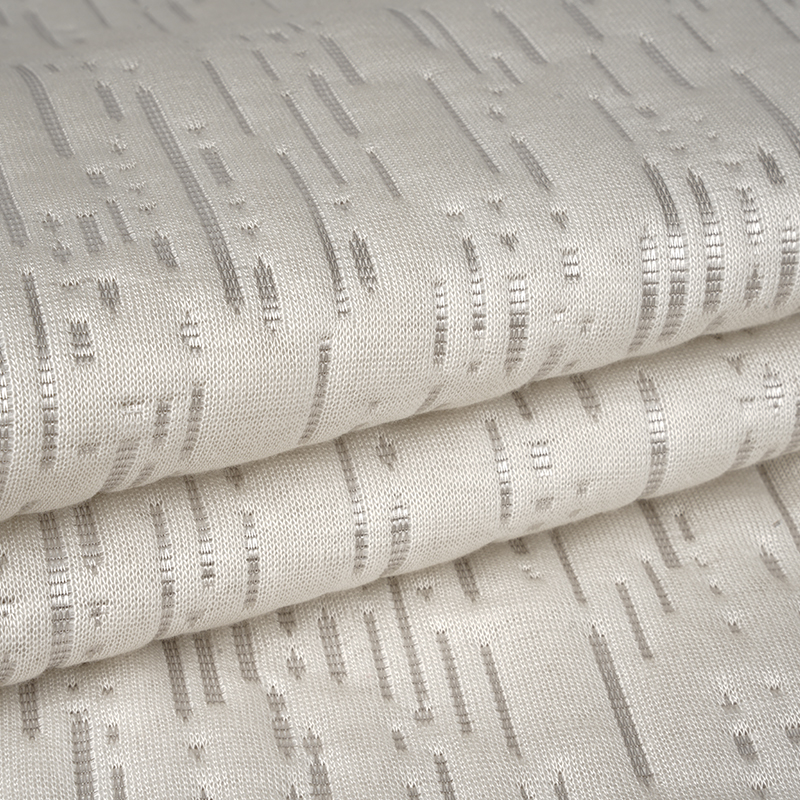
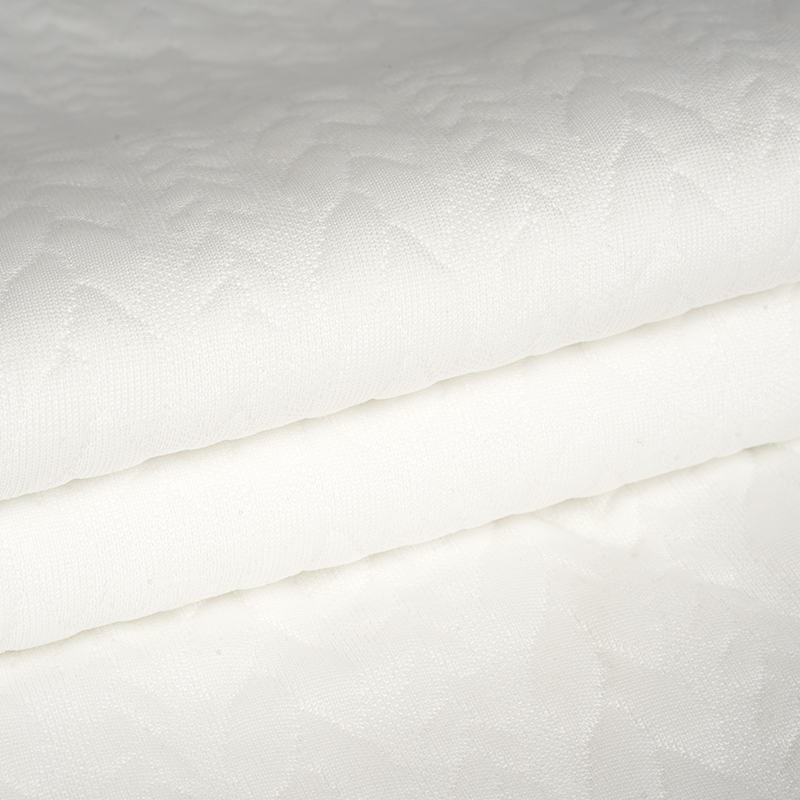
Antibacterial Yarn Children Mattress Fabric
Antibacterial Yarn Children Mattress Fabric
-
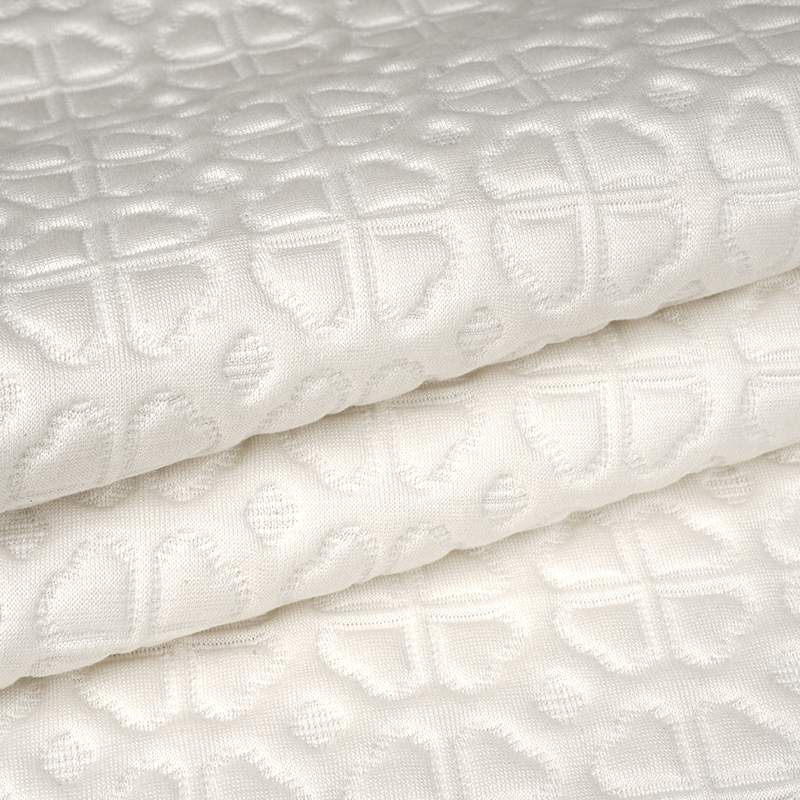
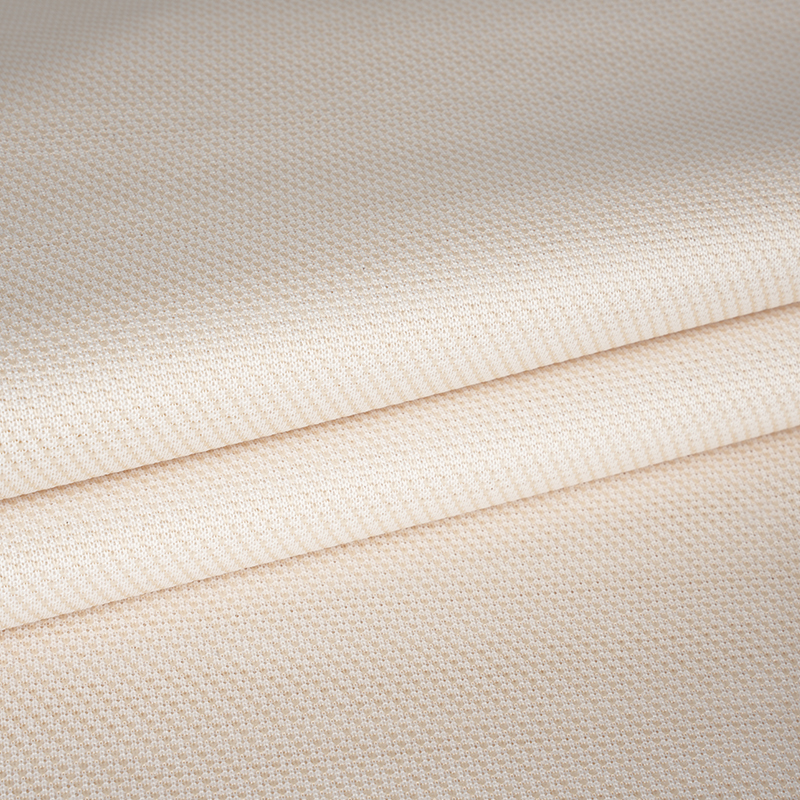
Antibacterial Yarn Children Mattress Fabric
Antibacterial Yarn Children Mattress Fabric
-
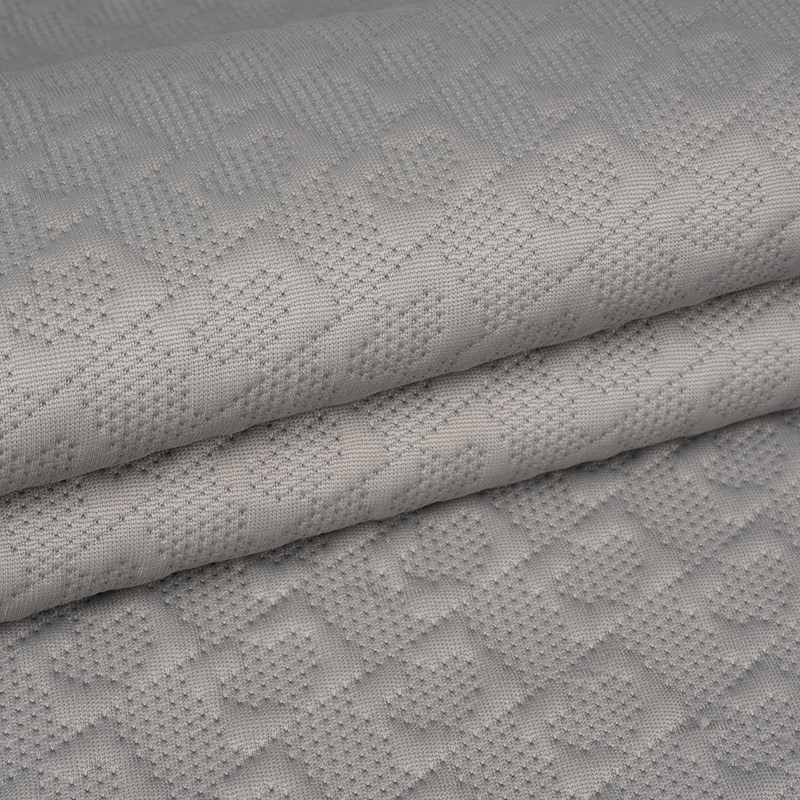
Antibacterial Yarn Children Mattress Fabric
Antibacterial Yarn Children Mattress Fabric
Haven’t Found The Products You Want?
-
-
Shen Jinyan:+86-15158070676
[email protected]
Liang Jinwen:+86-15757186621
[email protected]
Qiu Yingyingn:+86-13819545790
[email protected]
Yi qiao Town, Xiaoshan District, Hangzhou City, Zhejiang Province, China
-
Products
Mattress Fabric Children Mattress Fabric Pillowcase Fabric Pregnancy Pillow Fabric Cooling Mat Fabric Bedding Fabric Sofa Fabric Pet Friendly Fabrics -
Contact Information
About Us Products Strength Sustainability News Contact Us
Copyright © Hangzhou Xinsili Decorative Fabric Weaving Co.,Ltd. All Rights Reserved.
Functional Decorative Textile Manufacturers
